- As autonomy advances, seating becomes the foundation of the overall cabin experience
- Flexible seating creates new engineering challenges that must be solved for real-world production
- Seating is evolving from a component to an integrated system with safety and occupant awareness
- Comfort innovations rely on systems that monitor occupants and support proper positioning in safety-critical scenarios
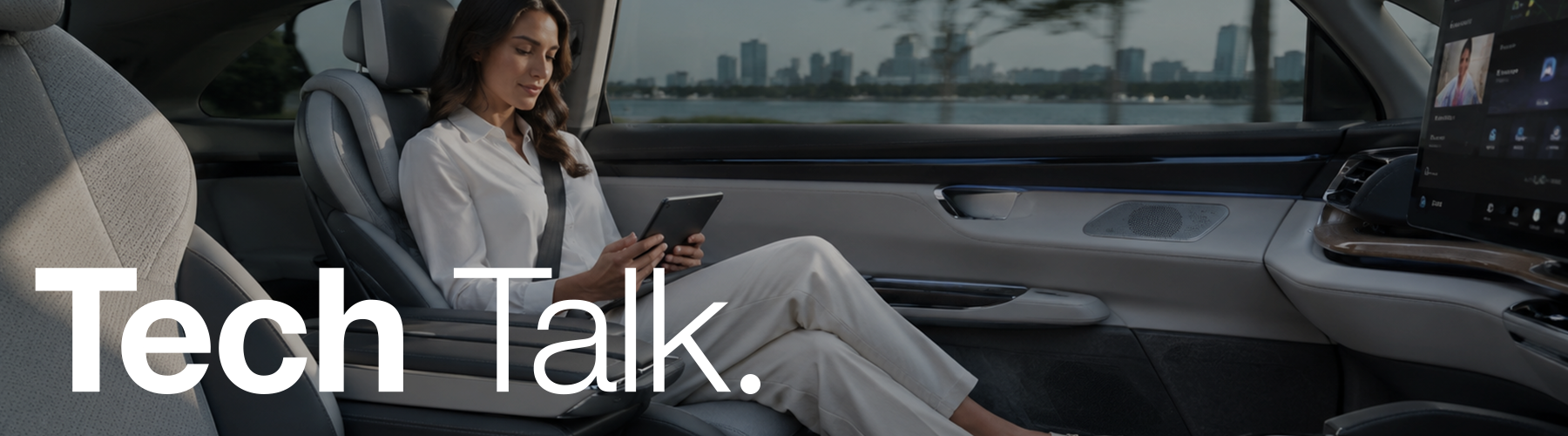
As vehicles move toward higher levels of automation—where driving becomes optional or fully automated—the interior cabin experience becomes a primary differentiator. In that shift, vehicle seating takes center stage, providing new opportunities for people to enter, sit, interact, relax, and stay protected throughout the journey.
Timelines for fully autonomous driving remain uncertain, but development across the industry continues to advance toward higher levels of vehicle autonomy. And as automated functions expand, the questions facing automakers extend well beyond sensors and computers, including a new challenge: how to design interior cabins that feel more like a second living space while maintaining safety, scalability, and cost discipline.
The future of seating is not defined by dramatic movement or lounge-like configurations, but by the ability to deliver flexibility efficiently. As occupants expect greater freedom to work, rest, and engage within the cabin, seating systems must support a wider range of use cases while remaining practical, integrated, and scalable across vehicle programs.
That’s why the seat can’t be treated as a standalone part. In highly autonomous vehicles, seating sits at the intersection of comfort, compliance, and occupant awareness. Flexibility must be coordinated with real-time occupant awareness, restraint systems, and the broader vehicle architecture. The goal isn’t to turn the seat into a showcase of features. It’s to build a system that adapts to the needs of the consumer, instead of the consumer needing to adapt to the traditional interior constraints.
This future is already taking shape. Even as full autonomy remains a longer-term horizon, reconfigurable seating continues to evolve in production vehicles. Magna has supported the development and production of a new generation of reconfigurable seating system featuring fully rotating driver and front-row passenger seats—an example of how flexible layouts can be engineered within real-world constraints and consumer demands.
Greater autonomy also opens the door to a renewed emphasis on physical comfort and ergonomics. Automakers are exploring expanded seating configurations, including extended reclining ranges and so-called “zero-gravity” comfort modes. Performance during vehicle dynamic events is an area of development and collaboration between regulatory agencies, suppliers and OEMs. This collaboration helps to create systems designed to ensure occupants are in appropriate positions when needed.
As autonomy advances, the vehicle interior will become a smarter, more integrated environment. Cameras, sensors, and automated systems will work together to understand occupant behavior in real time, while predictive technologies may proactively adjust seating positions, cabin configurations, and restraints ahead of potential collisions to help reduce injury risk.
The key takeaway is this: as the vehicle cabin evolves into the core of the consumer experience, seating becomes its foundation. In an autonomous future, excellence won’t be defined by seat adjustability alone, but by how intelligently movement, sensing, and protection systems work together—delivering comfort and flexibility through integration, not complexity.
If you want to go deeper, explore how Magna is approaching seating systems designed for flexible interior cabins.