5-min read
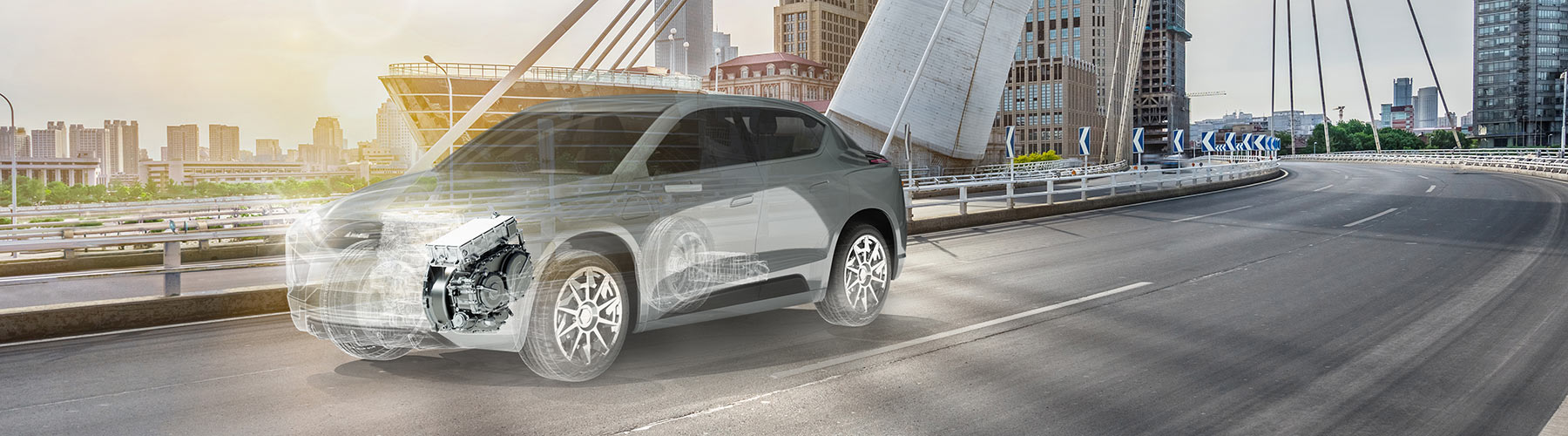
DHD DUO: A Scalable Hybrid Architecture for a Market That Demands Flexibility
Electrification is no longer linear. Regulatory pressure, uneven EV adoption, regional infrastructure gaps and shifting consumer expectations are among the factors pushing automakers to rethink how they design platforms for the next decade. The real challenge isn’t simply whether to electrify, but how to build flexibility into platforms without driving up cost, complexity and development risk.
Hybridization has emerged as a critical strategic bridge. But as OEMs broaden their global platform plans, many are finding that traditional hybrid solutions weren’t designed for today’s reality. Modern programs require multi-segment scalability, faster development cycles and the ability to hedge electrification strategies region by region.
This is where Magna’s DHD Duo comes in.
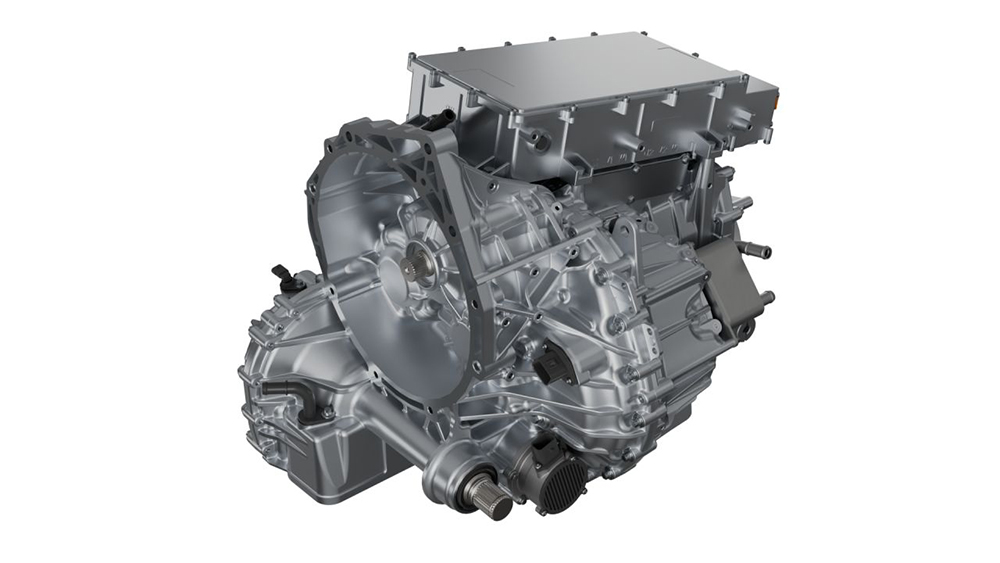
As the newest evolution of Magna’s Dedicated Hybrid Drive series, DHD Duo isn’t just another hybrid transmission. It’s a modular, scalable hybrid architecture engineered to give OEMs more freedom in how they electrify and configure their platforms.
Why Scalable Hybrid Architectures Matter Now
The industry is consolidating vehicle platforms, expecting fewer architectures to serve more propulsion variants, vehicle sizes, and regional regulatory needs. That makes flexibility a top priority.
Historically, integrating hybrid capability required factors such as:
- Major platform and transmission redesigns
- Packaging compromises
- Segment-specific engineering solutions
- Longer development cycles and higher cost
That model doesn’t scale well, and it certainly doesn’t adapt quickly when market conditions shift.
DHD Duo breaks that cycle. Using Magna’s scalable building blocks, it gives OEMs flexibility to deploy anything from a range extender layout to multispeed hybrid drives across different vehicle platforms. It maintains key BEV-like characteristics—such as quick torque response and smooth, quiet acceleration—while preserving the long-range capability of an ICE supported system. It maintains key BEV like characteristics—such as quick torque response and smooth, quiet acceleration—while preserving the long range capability of an ICE supported system.
This is hybridization purpose-built for uncertainty.
Inside DHD Duo: Modular by Design, Flexible by Nature
At its core, DHD Duo is a Dedicated Hybrid Drive built around a P1 + P3 hybrid layout, meaning it uses two electric machines at two different points.
- 90 kW P1 generator mounted on the engine side, managing electric energy generation, and engine start
- 140 kW P3 propulsion motor placed downstream in the drive, delivering electric drive torque directly to the wheels and handling regenerative braking
This dual‑motor approach allows the system to combine the familiarity and range of an ICE powertrain with the instant torque and smooth responsiveness of an EV.
What sets DHD Duo apart is the architecture strategy behind this layout. The system integrates directly with existing ICE outputs and uses a modular gearset—configurable from one to four gears—so OEMs can tailor performance, towing capability and traction to each vehicle segment.
This modular design supports multiple hybrid layouts, including:
- Serial-only (range extender) architecture for REEV applications
- Serial-parallel hybrid architecture with one to four speeds for combustion engine operation
- Enhanced pure-EV capability through added C0 clutch, enabling P2 + P3 blended e-motor traction
In practical terms, DHD Duo provides OEMs with a common set of building blocks that can be scaled across platforms, regions and performance targets. This eliminates the need to engineer bespoke hybrid solutions for every program.
Three Operating Modes, One Intelligent Control Strategy
DHD Duo supports three primary operating modes: pure electric, serial hybrid and parallel hybrid. More importantly, it allows seamless transitions between these modes based on vehicle demand, battery state of charge and driving conditions.
- Pure Electric Mode: Enables zero-emission driving in urban environments with EV-like performance characteristics such as smooth, quiet acceleration
- Serial Mode: The ICE in combination with the P1 generates electricity while the e-motor (P3) drives the wheels, optimizing efficiency in low-speed and stop-start conditions
- Parallel Mode: The ICE and e-motors work together to deliver increased performance, particularly under acceleration or high load
The system’s control software optimizes mode selection in real time based on:
- Power demand
- Vehicle load
- Battery state of charge
- Drive cycle
- Selected gear count and architecture configuration
Because strategy is software‑defined, OEMs can fine‑tune behavior for each program—enhancing efficiency, performance or drivability depending on the target use case.
What Makes DHD Duo Different
DHD Duo was engineered to solve the specific constraints OEMs face today—platform consolidation, cost pressure and uncertainty around regional electrification timelines. Several qualities set it apart:
- Scalable Across Segments: One architecture works across compact, mid‑size and larger vehicle classes. Gear count, clutch options and modular integration allow tailored performance without new hardware families.
- Modular Integration: The standard building block approach allows OEMs to adapt the system through gear count, clutch integration and operating strategy rather than creating new solutions for each program.
- Minimal Platform Disruption: DHD Duo integrates with existing ICE architectures and transmissions, avoiding major structural changes. This helps control both development cost and time-to-market.
- Performance Without Tradeoffs: Delivers EV-like drivability—such as smooth pedal response and instant torque delivery—without sacrificing range, towing capability or drivability.
In a market where OEMs are being asked to do more with less, DHD Duo provides a practical path to electrification that does not force hard compromises between efficiency, performance and cost.
As electrification paths continue to diverge across regions and segments, architectures that can support multiple propulsion strategies without locking platforms into a single future become increasingly valuable. DHD Duo reflects that reality. It gives automakers a practical way to electrify at scale while preserving the performance, drivability and capability customers expect.
It’s a hybrid solution designed for where the market is today, and can also support where it’s likely headed next.
To further explore how DHD Duo could integrate into your hybrid strategy and platform roadmap, connect with Magna’s powertrain experts or download our full technical paper.

We want to hear from you
Send us your questions, thoughts and inquiries or engage in the conversation on social media.
Related Stories
4-min read
The Real Challenge of Software-Defined Vehicles Isn’t Software
Read story
5-min read
ClearView™ Vision System: One Platform, Four Ways to See More
Read storyStay connected
You can stay connected with Magna News and Stories through email alerts sent to your inbox in real time.