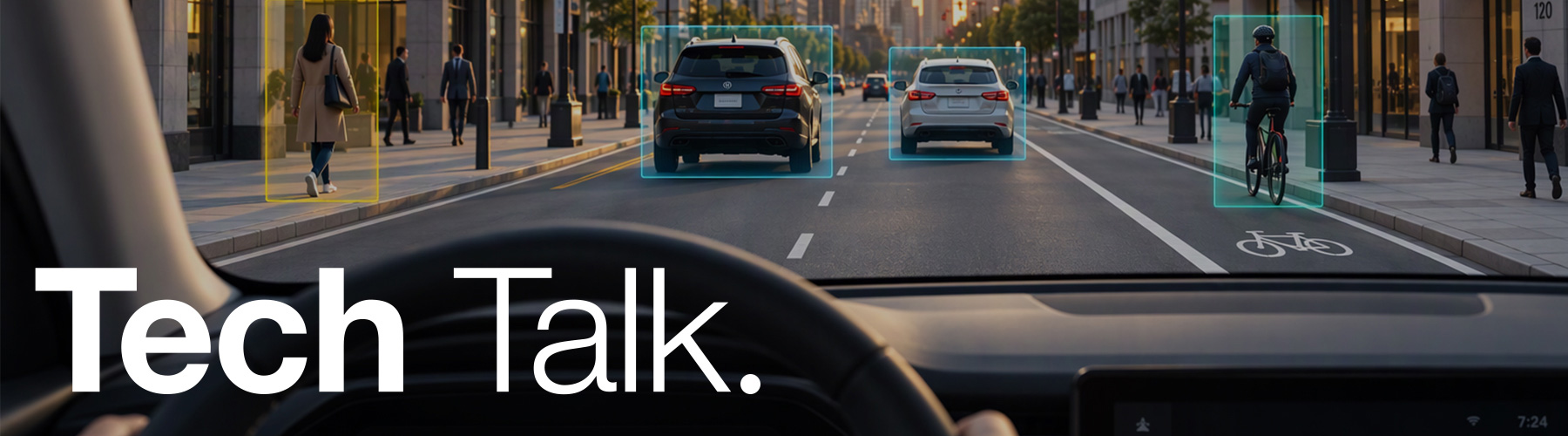
For much of the evolution of ADAS, progress was measured by the features added to the vehicle. Automatic emergency braking. Adaptive cruise control. Lane keeping. Automated parking. Each capability represented another step forward.
The next generation of ADAS is beginning to look different. The shift is not simply toward more features, but toward a common technology foundation that allows the vehicle to perceive, understand, decide and act across multiple functions.
From Individual Features to Shared Intelligence
Traditionally, many ADAS functions have been developed as distinct systems, with their own sensing requirements, algorithms and integration paths. The emerging model is more integrated.
Sensor information can be shared across applications, common perception can create a consistent understanding of the environment, and centralized compute, world models and planning can support multiple functions. The question becomes less about how many features a vehicle offers and more about how intelligently it can understand and respond to its environment.
AI Changes the Development Model
Traditional ADAS has relied heavily on deterministic algorithms and carefully engineered rules. Those approaches remain important, but AI is becoming increasingly significant in perception, prediction and decision-making.
Neural-network-based perception, sensor fusion, learned prediction and emerging end-to-end approaches create opportunities to address more complex driving situations. Instead of engineering a response to every scenario, development increasingly includes systems that can learn patterns and generalize across a broader range of situations.
Greater intelligence, however, also places greater demands on the technology platform supporting it.
Architecture Becomes Part of the ADAS Strategy
Adding another camera or radar can expand what a vehicle sees, but sensing alone does not determine system capability. What matters is how effectively the entire chain works together:
Sensors → Perception → Compute and AI → World Model → Planning → Actuation
This makes compute, memory, networking, middleware and software integration strategic parts of ADAS development. Early architectural decisions can determine which algorithms can be deployed, how effectively data can be shared and how easily the system can evolve.
Architecture is increasingly becoming part of the ADAS strategy itself.
From an ADAS Computer to a Vehicle Platform
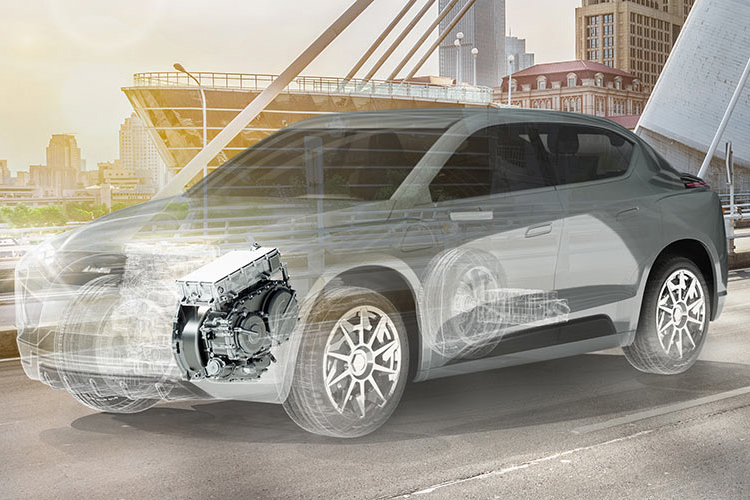
As vehicle computing becomes more centralized, ADAS increasingly operates within a broader vehicle architecture that must support different sensors, software stacks, vehicle segments and levels of functionality.
The platform also needs room to evolve. New software and AI technologies may need to be introduced without redesigning the underlying hardware, while continuing to meet requirements for safety, cybersecurity, cost, power, thermal performance and reliability.
The ability to adapt without repeatedly redesigning the foundation can be an engineering advantage.
From Vehicle Launch to Continuous Evolution
Historically, much of a vehicle's capability was established when it entered production. Software-defined architectures are changing that model by allowing capabilities to evolve throughout the vehicle lifecycle.
A scalable foundation can also enable sensing, compute, middleware and software investments to be reused across multiple functions and vehicle programs. Increasingly, the product is not simply an individual ADAS function, but the platform and software ecosystem that enable a portfolio of capabilities.
The Hard Part: Industrializing Intelligence
Advanced AI can demonstrate significant technical capability in controlled settings, but deploying it across millions of production vehicles is a different challenge. Automotive systems must balance performance with safety, compute, thermal limits, cost, validation, manufacturing and lifecycle support.
Innovation therefore cannot stop at the algorithm. The larger challenge is connecting advances in AI and software with the engineering discipline required to validate, manufacture and support automotive systems at scale.
The next phase of ADAS may be defined not only by who can create advanced intelligence, but by who can industrialize it effectively.
Looking Beyond the Feature List
The next generation of ADAS will continue to introduce new features, but the bigger transformation may be happening underneath them through shared sensing, perception, centralized compute, AI-enabled software and flexible vehicle architectures.
Together, they create a foundation that can deliver more than any individual sensor, algorithm or ECU can provide on its own. Competitive advantage may increasingly come from bringing sensors, compute, AI, software and vehicle systems together into a platform that is safe, scalable, cost-effective and capable of evolving over time.
That may be the real shift in next-generation ADAS: moving from engineering individual features to engineering the intelligence platform that enables them.
To learn more about Magna's integrated sensing, compute and software solutions for ADAS and the future of automated driving, visit www.magna.com/products/electrical-electronics/adas---automated-driving.