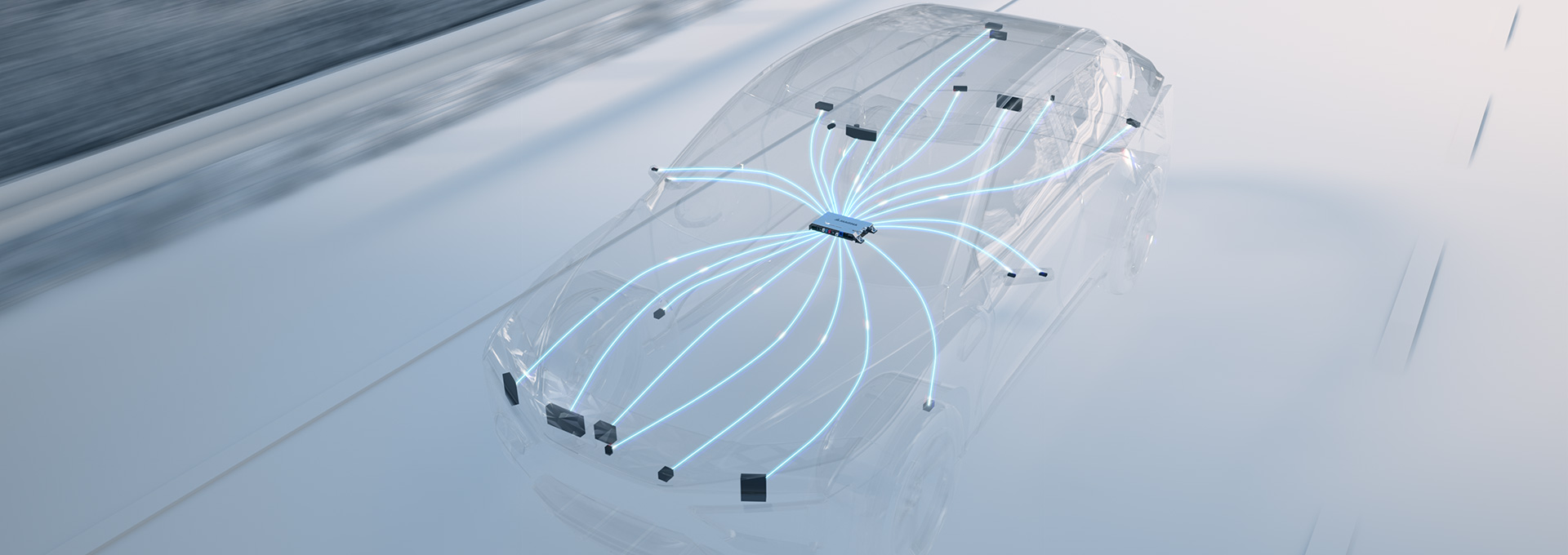
A shared centralized compute architecture can be scaled across ADAS levels and vehicle segments, enabling OEMs to implement differentiated feature sets across trims without replicating core software and integration work. By reducing the number of distributed compute nodes, system complexity is lowered—simplifying software deployment, reducing configuration and version-control overhead, and improving the scalability of OTA update workflows.
As perception models evolve towards more data-driven and multi-modal fusion approaches, the compute platform is already in place to accommodate increased model complexity and higher data throughput requirements. This shifts vehicle architecture toward longer-term adaptability, rather than constraining functionality to a fixed feature set defined at SOP.
To realize these benefits, validation must scale with system complexity. Centralized compute architectures therefore require tightly integrated development and test infrastructure, including simulation, SIL/HIL environments, and fleet-based validation. Magna supports this through cloud-based simulation, hardware-in-the-loop testing, and real-world fleet validation — enabling faster iteration cycles while maintaining coverage and system-level confidence prior to production release.
This is further supported by Magna’s global engineering network, including dedicated software and systems engineering teams focused on E/E architecture, perception algorithms, and validation tooling. This capability enables support across the full development lifecycle, from architecture definition through to production-grade validation of centralized compute systems.