
4-min read
The Future of Interior Cabin Monitoring: Scalable, Modular, and AI-Ready
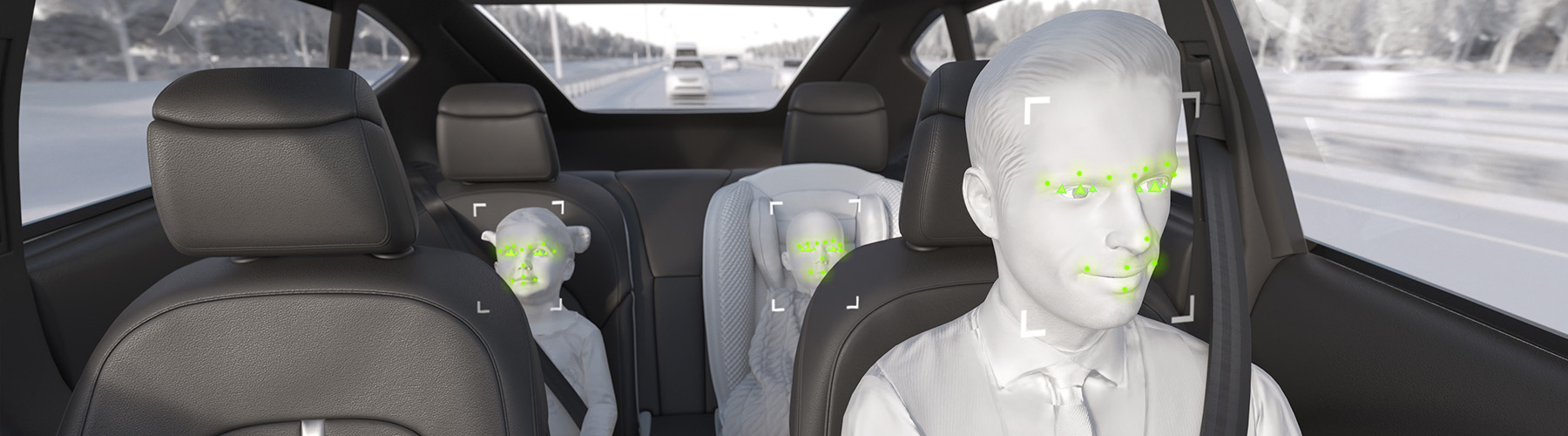
Interior cabin monitoring has quickly shifted from a supplemental safety feature to a foundational system within modern mobility. Driver and occupant sensing now influence everything from ADAS performance to personalization to compliance with fast‑changing global safety regulations. But as monitoring technologies advance, many OEMs face a growing challenge: how to scale these capabilities across vehicle lines without raising cost, complexity, or hardware variations.
Traditional development models—building one system per vehicle platform—no longer keep up with the pace of innovation. Assessment protocols such as Euro NCAP’s increasingly stringent interior cabin monitoring requirements are driving rapid upgrades in the interior sensing space, as other regions follow Europe’s lead. Consumers expect more intelligent and personalized experiences. Meanwhile, vehicle architectures themselves are transitioning toward centralized, software‑defined designs.
A more flexible, modular approach is required.
Why Traditional Approaches Don’t Scale Anymore
Earlier generations of driver and occupant monitoring systems (DMS/OMS) were simpler. Platforms could support isolated systems with minimal cost or variant complexity. That’s no longer the case.
Today’s interior cabin systems often combine:
- Color and infrared cameras with active illumination
- Interior radar or other complementary sensors
- Local or centralized processing
- AI driven software models
These components must work together to track driver attention, detect fatigue, classify occupants, enable child‑presence detection, and support a range of ADAS‑related functions.
As feature sets grow, platform‑specific hardware becomes harder to justify. Maintaining unique variants for each vehicle line increases engineering time, testing requirements, and integration cost. At the same time, reducing capability in entry‑level vehicles often risks falling short of regulatory requirements.
The result: OEMs need a single architecture that can scale up or down without redesigning the entire system.
A Modular Architecture for Multiple Vehicle Segments
Across the industry, engineering teams increasingly agree that the future of interior cabin monitoring depends on scalability, modularity, and unified processing. Rather than building a new system for each vehicle segment, OEMs benefit from one adaptable architecture that can support different feature packages with minimal hardware changes.
Two elements enable this shift:
Flexible Hardware Integration – A scalable architecture must accommodate multiple sensing technologies and multiple mounting locations—whether in the mirror, the instrument panel, overhead console, pillars, or other interior structures.
The goal is not a single location, but a platform that:
- Reduces variant complexity
- Supports different sensor combinations
- Fits a broad range of interior designs
- Enables scalable features for regulatory, safety, and personalization needs
- Allows OEMs to match capability to segment and cost target
This flexibility presents a single hardware strategy that can serve both entry level vehicles and premium models.
Unified, Sensor‑Fusion‑Driven Software – Software plays an even more critical role. By integrating interior cabin sensing into the broader ADAS sensor fusion ecosystem, OEMs can:
- Reduce processing redundancies
- Simplify electrical architecture
- Add or upgrade features through software
- Accelerate development cycles
- Support AI‑driven capabilities
This approach also enables “plug and play” configurations—supporting everything from seat belt improper usage detection to advanced cognitive state analysis—without redesigning hardware for each feature set.
Preparing for the Next Generation of Intelligent Interiors
A scalable, modular monitoring architecture not only works towards solving today’s challenges but unlocks what’s coming next. Magna’s advanced research teams are exploring emerging capabilities that extend far beyond traditional driver monitoring, including camera‑based health and wellness sensing along with sensor fusion for occupant state analysis that is aimed at assessing:
- Heart rate
- Breathing rate
- Changes in alertness
- Early indicators of various types of impairment or medical distress
- Occupant positions or behaviors posing a risk in the event of accident
-
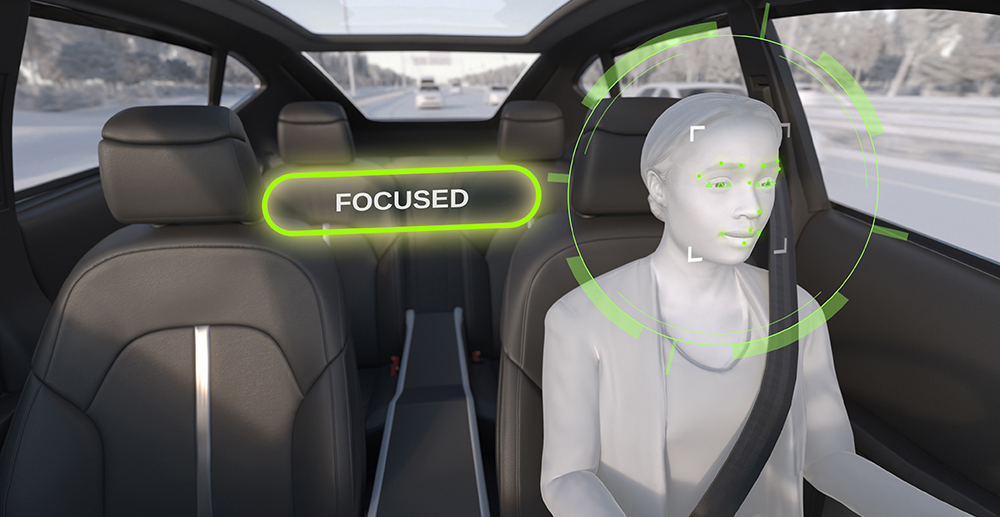
Interior sensing systems can distinguish attentive driving states, creating the foundation for more adaptive, AI-ready safety features. -
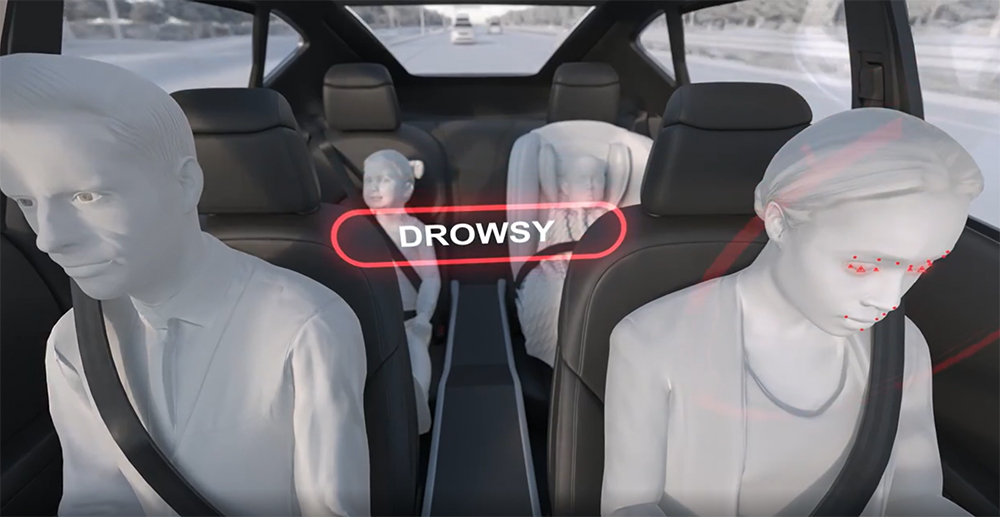
Scalable cabin monitoring can extend beyond the driver to assess occupant state across the vehicle using a unified sensing architecture. -
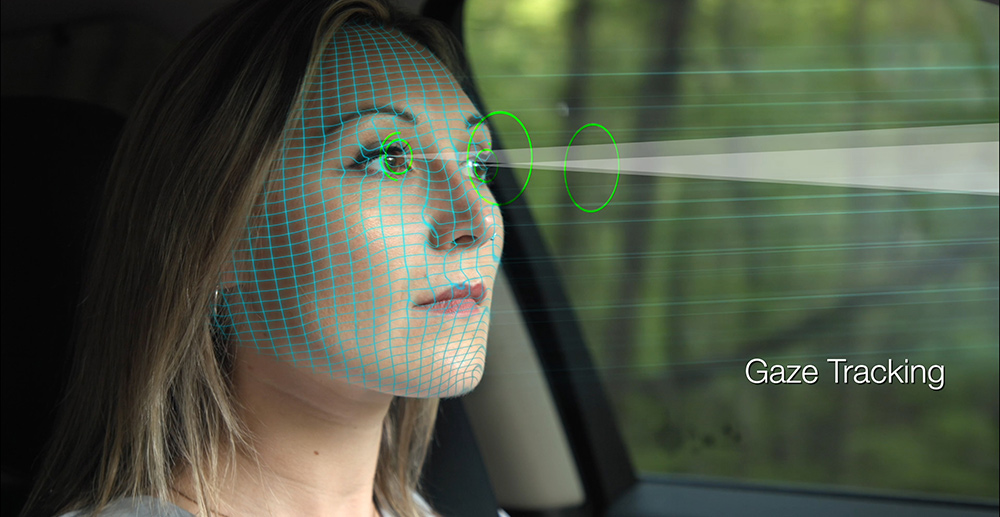
Gaze tracking helps assess where a driver is looking, supporting more accurate attention monitoring and smarter ADAS interaction. -
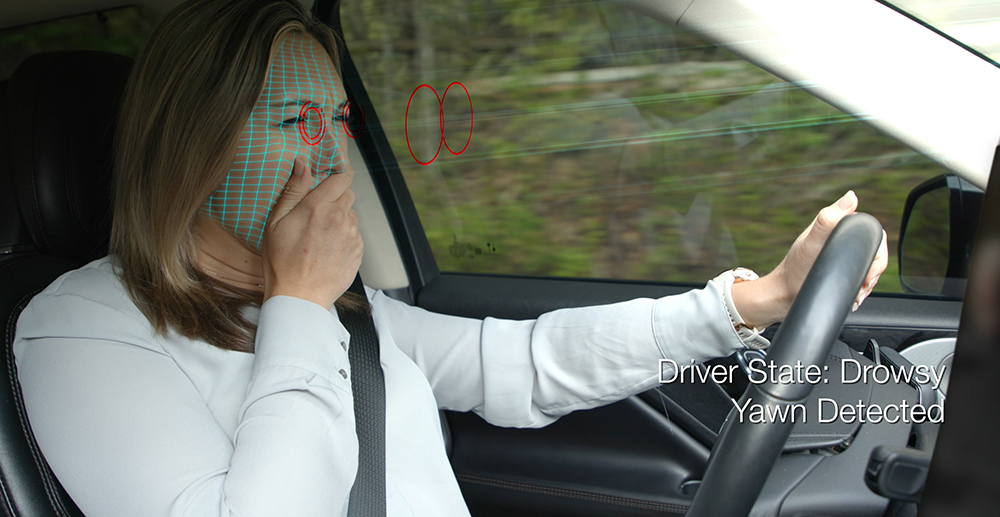
Driver monitoring helps detect signs of fatigue in real time, enabling alerts and safety interventions before drowsiness becomes a greater risk.
Importantly, this breakthrough didn’t come from exotic materials or entirely new chemistries. It emerged from Magna’s cross-disciplinary collaboration among manufacturing, engineering, tooling, and simulation teams — proving that process innovation alone can overcome long-standing physical limitations.
As occupant monitoring expands beyond traditional driver‑only functions, system architectures must support wider fields of view, more flexible sensor placement, and multimodal fusion across the entire cabin. These demands—now reinforced by Euro NCAP’s interior cabin requirements—make scalable, modular designs far more impactful than in earlier DMS‑focused generations.
By analyzing trends over time, AI and machine learning models are working toward detecting deviations from a driver or occupants’ baseline and initiating adaptive safety responses across the cabin. These possibilities were once considered far‑fetched, yet they’re becoming increasingly realistic as sensing and processing technologies evolve.
Looking ahead, scalable in‑cabin monitoring will enable OEMs to deliver:
- More accurate driver state prediction
- Higher‑confidence ADAS decisions
- Deeper personalization
- Enhanced occupant protection
- New user‑experience features driven by AI
The shift from redundant, platform‑specific systems to a single, modular architecture is more than an engineering choice. It’s a strategy that aligns with the transformation toward software‑defined vehicles and the growing role of AI in mobility.
Looking Ahead
Occupant monitoring is poised to influence far more than safety—it will shape how drivers and passengers experience intelligent vehicles. By adopting a flexible architecture that supports multiple sensor types, multiple integration points, and unified software, OEMs can finally begin to scale in‑cabin monitoring in a cost‑effective and future‑ready way.
For Magna, this shift represents a major opportunity: to deliver adaptable monitoring systems today and push the boundaries of what in‑cabin intelligence can enable tomorrow.

We want to hear from you
Send us your questions, thoughts and inquiries or engage in the conversation on social media.
Related Stories
5-min read
5 Technology Shifts Reshaping Vehicle Access
Read story
4-min read
The Real Challenge of Software-Defined Vehicles Isn’t Software
Read storyStay connected
You can stay connected with Magna News and Stories through email alerts sent to your inbox in real time.