
9-min read
The Future of UI/UX Concept Visualization in the Automotive Industry: Innovations, Challenges, and Perspectives
A NEW ERA OF VEHICLE DESIGN
The automobile is no longer just a means of transportation. It is a highly complex system driven by digital technology, featuring an advanced interplay of sensors and assistance systems. It offers the driver space for comfort and interaction. The User Interface (UI) and User Experience (UX) play a key role, as they function as the interface between human and vehicle and have become central components of vehicle development.
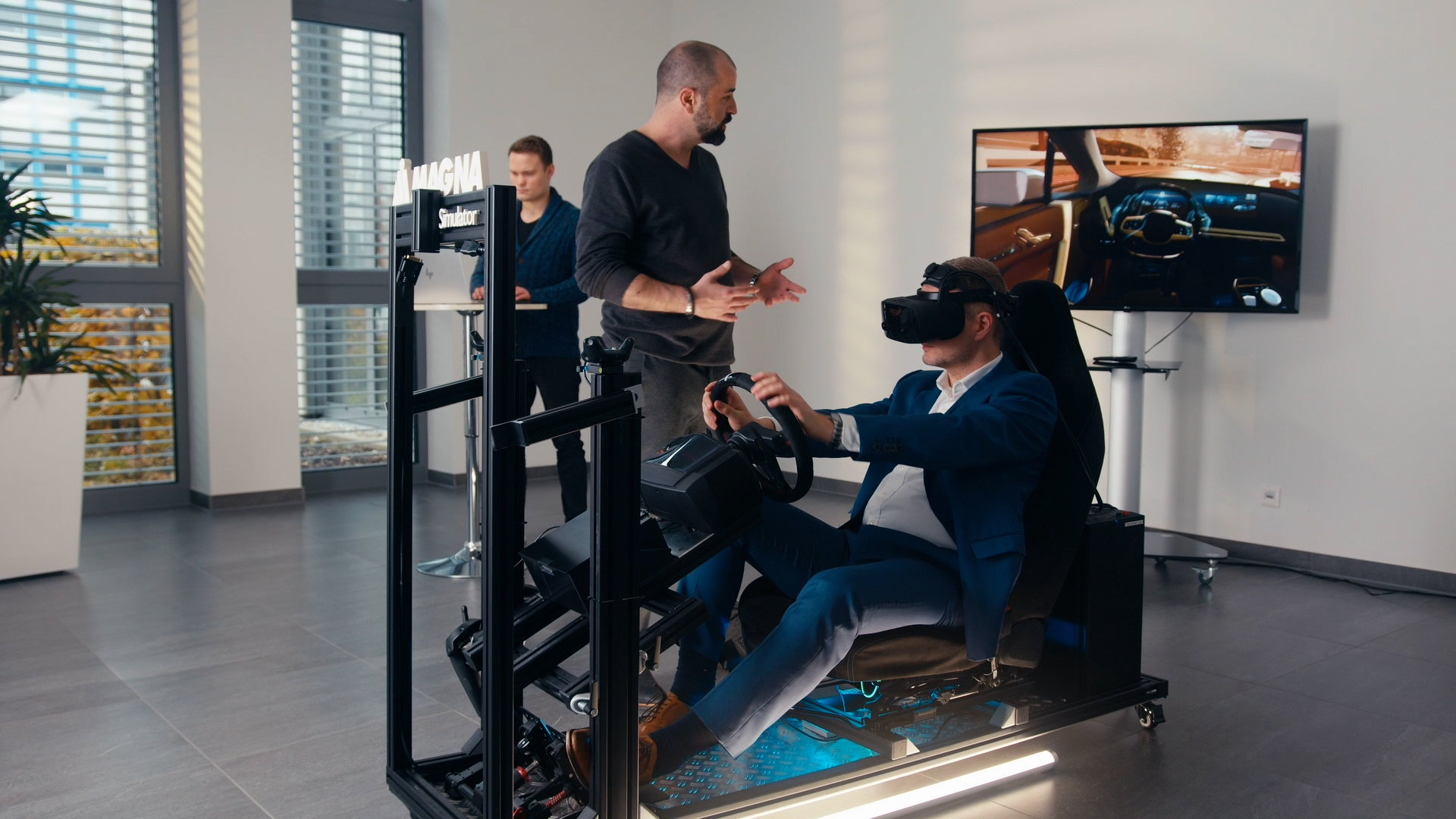
For manufacturers, this means: operating concepts must be intuitive, safe, and adaptable. Drivers should be able to use functions intuitively without being distracted from the road. At the same time, the vehicle should appear modern, innovative, and emotionally appealing. This is where the transformative power of UI/UX design comes into play—supported by technologies such as Virtual Reality (VR) and Extended Reality (XR), which fundamentally change the design process and enable concept visualization.
INTUITIVE INTERACTION: WHY UI/UX IS SO IMPORTANT IN AUTOMOTIVE ENGINEERING
Modern vehicles feature a multitude of functions: driver assistance, navigation, infotainment systems, and more. All these technologies must be designed to be user-friendly and safe. Customers expect their vehicles to be as easy to operate as a smartphone. This poses the challenge of offering interaction options—whether touchscreens, voice control, or gesture control—without overwhelming the driver.
The key question is: How can these complex systems be designed so that they do not overwhelm the driver, require minimal attention during operation, and simultaneously create added value and functional expansion? Technologies such as VR and XR help answer this fundamental question. Early concepts can be tested in virtual environments. UI/UX concept visualization ensures that new concepts and products are not only functional but also emotionally appealing. The customer should feel comfortable with the product and perceive it as an extension of their personal world.
CHALLENGES IN UI/UX DEVELOPMENT: FROM IDEA TO REALITY - WITH OPTIMAL CONCEPT VISUALIZATION
Designing easy-to-use interfaces brings specific challenges. One of the biggest is the complexity of modern vehicles. They not only contain more sensors and functions but also require perfect interaction among all systems. For example, driver assistance systems must process data in real time and provide relevant information without distracting the driver.
Additional challenges include context dependency: interfaces must adapt to various usage scenarios, such as city driving, highway driving, or stationary operation. Vehicles are now highly connected, and all functions must be displayed and operated intuitively. Scalability and adaptation to new technologies are important factors. Customers expect vehicle software to stay up to date through updates - just like smartphones. Safety aspects are crucial: drivers must not be distracted by interactions with the interface. Technologies such as eye-tracking analyze the driver’s gaze to detect critical situations like fatigue or distraction. These challenges require innovative solutions. Designers rely on iterative processes in which concepts are continuously tested and optimized. User studies provide valuable feedback to identify and address weaknesses.
TOOLS OF UI/UX DEVELOPMENT: CREATIVITY MEETS TECHNOLOGY
Designing modern interfaces requires a combination of creative and technological approaches. Central to the development process are tools that facilitate the visualization and validation of ideas and concepts. These include wireframing and mockups. Initial drafts visualize the basic structure of an interface and are used to test element placement and user flow. Interactive high-fidelity prototypes closely resemble the final product and allow realistic testing, especially in later development stages.
VR and XR are immersive technologies that allow designers to experience concepts sensorially in virtual environments. Designers can collect feedback early and apply changes directly. User journeys visualize typical usage scenarios and help guide design decisions from the user's perspective. Mood boards and style guides define the visual language of a design, including principles, colors, fonts, and animations. These tools make the development process more efficient and user-focused, resulting in a thoroughly tested final product that meets all requirements.
IMMERSIVE TECHNOLOGIES: HOW VR AND XR REVOLUTIONIZE THE DESIGN PROCESS THROUGH CONCEPT VISUALIZATION
Virtual Reality (VR) and Extended Reality (XR) have the potential to transform traditional design methods. Instead of creating complex physical prototypes, concepts can be simulated and tested in virtual environments. This saves both time and costs.
The benefits of VR/XR include cost savings, as building physical prototypes is expensive and time-consuming. VR/XR allows alternatives to be implemented quickly and cost-effectively. Flexibility is another advantage: changes can be made instantly in the virtual environment, significantly speeding up iterative processes. Realistic simulations allow users to experience the vehicle and its functions in nearly lifelike environments, enabling informed decisions. However, when it comes to testing haptics and material properties, physical prototypes remain important in later development phases.
NEW HORIZONS FOR INTERIOR DESIGN
The possibilities of VR and XR extend beyond interfaces and include the entire interior design. In lighting design, these technologies open new perspectives. Lighting elements today are more than functional—they serve as interactive communication tools that shape the vehicle experience. Innovative lighting systems can signal incoming calls with pulsating effects.
Warning lights on doors can alert drivers to cyclists or pedestrians or warn of blind spots. They can also be used creatively, such as dynamic lighting effects that react to music or driving modes. Ergonomics testing also benefits from VR. Designers can evaluate and adjust the placement of controls, seats, and displays in virtual environments to ensure maximum comfort.
EFFICIENCY, ERROR PREVENTION, AND COMPETITIVE ADVANTAGES
Modern UI/UX methods offer several key advantages. Iterative processes and immersive technologies allow faster concept testing and adjustments, shortening development times. Virtual tests help detect issues early before they delay or increase development costs. The combination of digital tools, VR, and XR reduces the number of physical prototypes, saving material and production costs. Realistic test scenarios result in designs that are both functional and aesthetically pleasing.
Ultimately, innovative UI/UX design creates a unique selling point and enhances vehicle appeal. Magna, as one of the industry's leading service providers, offers not only design solutions but also supports customers from concept to series production. Thanks to its flexibility and experience, Magna can address the specific needs of various vehicle manufacturers.
THE ROAD AHEAD
The cockpit of the future is digital, interactive, and personalized. Technologies such as voice control, gesture control, and personalized profiles will shape users' daily experiences. The challenge lies in designing these innovations so they integrate seamlessly into the vehicle and resonate emotionally with users. With its extensive experience and innovative strength, Magna is a pioneer in UI/UX development. By leveraging cutting-edge technologies and focusing on user needs, the company is shaping the future of the automobile. The automotive industry is undergoing an exciting transformation—and UI/UX design with optimal concept visualization is one of the keys to mastering it successfully.
Stay connected with Inside Automotive!
You can keep updated with Magna's Inside Automotive through email alerts in real time. Subscribe now!

FAQs - UI/UX Concept Visualization
What is UI/UX concept visualization in the automotive industry?
UI/UX concept visualization refers to creating early interactive representations of digital cockpit interfaces—often using VR/XR—to test usability, aesthetics, and user interaction before physical prototypes exist.
Why are VR and XR important for automotive UI/UX development?
VR and XR allow designers to experience and test cockpit concepts in immersive environments, helping detect usability issues early, reduce physical prototypes, and speed up the design process.
How do immersive technologies improve driver safety?
By simulating real driving scenarios, designers can test how drivers respond to interface layouts and alerts, ensuring minimal distraction and optimizing safety‑critical features like warnings and navigation cues.
What are the biggest challenges in automotive UI/UX design today?
Key challenges include increasing vehicle complexity, integrating many functions into intuitive interfaces, ensuring safety, supporting software updates, and delivering a seamless, personalized user experience.
How does concept visualization help manufacturers save time and money?
Virtual simulations reduce the number of physical prototypes needed, uncover design flaws earlier, and enable faster iteration—resulting in shorter development cycles and lower production costs.
We want to hear from you
Send us your questions, thoughts and inquiries or engage in the conversation on social media.
Related Stories

9-min read
Supply Chain Optimization: How Early Supplier Involvement Secures Time to Market
Read story
9-min read
Styling in Automotive Design: How Early Decisions Impact Time to Market
Read storyStay connected
You can stay connected with Magna News and Stories through email alerts sent to your inbox in real time.