4-min read

Control Issues: The Challenge of Level 3 Autonomy
Tremendous strides have been made on the journey to autonomous driving, but an intriguing gap has emerged in SAE’s five-level framework — and ironically, it has more to do with the human element than technological capability.
This challenge is Level 3 autonomy, which sits at a pivotal point between advanced driver assistance and full autonomy. It offers the promise of a more comfortable driving experience, but the transition to Level 3 is constrained by a complex mix of technical, legal and human-centric challenges.
To set the stage, SAE defines five levels of driving automation — from Level 0 (no autonomy) to Level 5 (full automation in all conditions). Most new vehicles sold [in developed regions] today are Level 2, offering partial automation like steering and braking but still requiring the driver to remain fully responsible and in control of the vehicle. At the high end, Level 4 systems (like Waymo’s robotaxis) operate autonomously within geofenced areas. Level 3 stands alone in a gray zone — the vehicle handles all driving in certain scenarios but must hand control back to the driver when needed.
Mercedes-Benz offers a Level 3 system in its S-Class and EQS sedans on specific highways in California and Nevada, but widespread adoption remains rare. That is because Level 3 demands a high degree of technological precision — integrating LiDAR, radar, cameras and AI to interpret surroundings and make real-time decisions — plus the ability to safely transition control to a human driver.

That transition, often called the handoff, is very difficult. Unlike Level 2 systems, which require constant driver supervision, Level 3 lets the driver disengage — reading, watching a movie or relaxing. But when the system encounters a situation it cannot handle, it must re-engage the driver, who may need several seconds to regain situational awareness. That lag time poses serious safety risks at high speeds or in complex environments.
Beyond technical hurdles, legal and regulatory uncertainty looms large. While countries like Germany, Japan and the U.S. are allowing limited Level 3 deployment, there is no global consensus on rules or liability. If a crash occurs while the vehicle is in autonomous mode, who is responsible — the driver, the automaker, or the software provider? This lack of clarity has prompted OEMs to move cautiously, wary of being caught in the legal crosshairs.
Cost is another limiting factor. The sensors, software and computing power required to meet Level 3 standards are not cheap, making the feature feasible only in high-end vehicles for now. There are also infrastructure and connectivity challenges, especially when it comes to scaling across varying road and traffic conditions.
Until clearer regulatory guidelines and safety benchmarks emerge, Level 3 is likely to remain confined to tightly defined environments. Still, it represents a critical test case — both technologically and societally — for what the next phase of autonomy could look like.
We want to hear from you
Send us your questions, thoughts and inquiries or engage in the conversation on social media.
Related Stories
5-min read
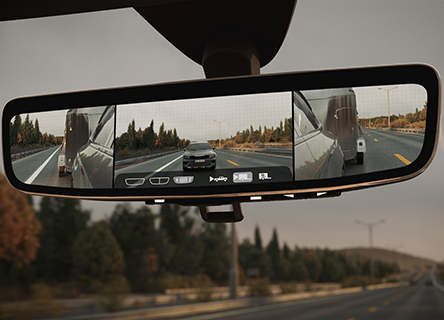
ClearView™ Vision System: One Platform, Four Ways to See More
Read story
5-min read
Why AI Success Starts with Business Value and Process Redesign
Read storyStay connected
You can stay connected with Magna News and Stories through email alerts sent to your inbox in real time.