
4-min read

5 Sustainable Materials Shaping the Next Vehicle Program
Sustainable materials aren’t new. What’s new is the expectation that they deliver premium design outcomes and production-grade consistency at the same time.
When sustainable concepts fall short, it’s typically due to variability in feedstock, spec drift, surface and appearance issues, joining performance, aging surprises, unclear cost curves, or supply that can’t scale beyond pilots. The goal isn't just lower-impact materials — it's industrializing them so they survive the gate process.
That shift is reshaping the materials landscape. According to industry estimates from Polaris Market Research, the global eco-friendly automotive interior materials market alone is projected to grow from about $9.25 billion in 2024 to more than $23 billion by 2034, driven by regulation and consumer expectations for lower-impact materials.
So the real question isn’t which materials sound promising in theory, but which ones hold up when engineering, procurement and design teams push them toward production.
Several material pathways are beginning to clear that hurdle. Each offers a different value proposition — and a different set of trade-offs teams need to evaluate early when engineering and design intent must hold up in high-volume manufacturing.
Below are five material pathways that are beginning to clear real engineering and manufacturing hurdles — the ones showing the most credible movement toward production.
Circular Seating Materials
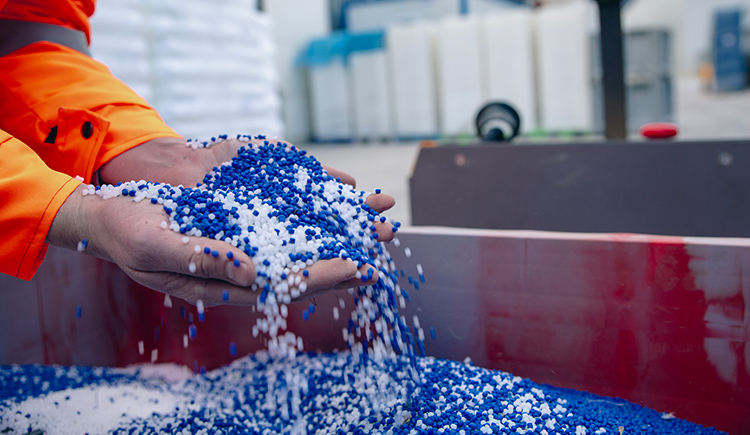
Circular seating programs require more than adding recycled content. Achieving true circularity means designing the full system (materials, attachments, coatings, and construction methods) so components can be separated, recovered, and reused at end of life. That requires alignment across the supply chain, from material innovation at Tier 2, to automotive-grade development at Tier 1, to specification approval at the OEM level. Lifecycle considerations, recyclability, cost, and regional requirements all need to be addressed early in development.
- Best for: seating programs targeting circularity, recycled content, or end-of-life recovery where sustainability goals must meet regulatory, customer and supply-chain scrutiny.
- Key considerations: material availability and consistency, coatings and surface treatments that affect recyclability, cost neutrality expectations, and varying regional requirements for end-of-life vehicle recycling.
- Production requirements: simplified or mono-material constructions, durability and heat stabilization testing, confirmed mechanical recyclability, and designs that allow components, attachments, and trim features to be easily removed.
- Potential value: supports scalable circular seating solutions by enabling widely available materials, seat architectures designed for disassembly at the end of life, and early alignment across suppliers, manufacturers, and OEMs — contributing to broader sustainability targets without compromising performance or cost.
Recycled Aluminum in Structural Castings
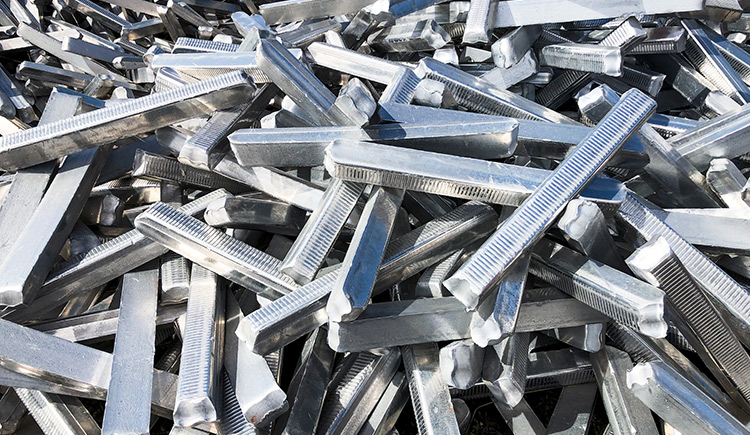
Recycled aluminum can significantly reduce embedded carbon — but structural programs demand consistency. According to industry estimates, producing aluminum from recycled scrap requires about 90% less energy than primary aluminum, but maintaining consistency at scale remains the engineering challenge. Structural castings simply can’t tolerate variability.
- Best for: structural castings where lightweighting and carbon reduction are both priorities.
- Key considerations: scrap-stream variability, defect sensitivity, surface requirements, and downstream joining/manufacturing window impacts.
- Production requirements: mechanical performance in production-representative geometries, consistency across lots, corrosion behavior, and joinability under real process conditions.
- Potential value: weight reduction opportunities that protect stiffness and packaging targets, freeing design and engineering to manage form, proportion, and feature integration with fewer mass penalties.

Natural Fiber Composites
Natural fibers stop being “nice interior trim” the moment they face engineering expectations: stability, durability, repeatability and integration.
Adoption is accelerating as OEMs explore renewable materials for interior modules and semi-structural components, with industry forecasts projecting the market to exceed $3.7 billion by 2033. The strongest near-term applications today are interior structural parts that have been shown in certain applications to deliver 10–25% weight reduction, improved stiffness-to-weight ratios and part consolidation.
- Best for: interior module and semi-structural components where mass reduction and stiffness can translate into real system benefit.
- Key considerations: moisture uptake and dimensional drift, odor/VOC, surface consistency, and supplier-to-supplier variability.
- Production requirements: thermal cycling durability, long-term dimensional stability, NVH interactions, and appearance retention for the intended surface class.
- Potential value: more flexibility to use regionally available fibers, supporting supply stability and renewable content goals.

Leather Alternatives & Recycled Textiles
Interior sustainability is ultimately judged by human perception. Consumers expect sustainable materials to deliver the same hand feel, visual quality, and durability as traditional interiors — and alternatives are gaining traction as material technology improves. Industry projections estimate the global automotive textiles market will grow from approximately $36 billion in 2024 to nearly $54 billion by 2034, creating opportunity for recycled and bio-based materials that can meet both sustainability targets and premium interior expectations. The challenge is ensuring these materials perform consistently within complex, multi-layer trim systems over the vehicle’s lifetime.
- Best for: seating and interior trim programs targeting higher recycled or bio-based content without compromising perceived quality.
- Key considerations: UV stability, abrasion and stain performance, color consistency, squeak-and-rattle interactions, and behavior in multi-layer trim stacks.
- Production requirements: lifetime-representative aging results, appearance retention, spec compliance under extreme operating conditions, and repeatability across suppliers/regions.
- Potential value: enables higher sustainable content while maintaining premium look and feel, supporting regulatory and market expectations without sacrificing durability, comfort, or interior quality.

Paint-Free Exterior Surfaces
Traditional paint operations are capital and energy-intensive, which is driving interest in paint-less surface finishing, including mold-integrated coating technologies that create finished surfaces during molding. These approaches aren’t universal paint replacements — they’re part-specific decisions driven by geometry, surface class, production volume and durability requirements. In the right applications they can eliminate secondary finishing steps while enabling distinctive surface effects.
- Best for: exterior polymer parts that need premium surfaces or styling differentiation without adding a full paint operation.
- Key considerations: geometry and surface consistency limits, cycle time trade-offs, repair strategy, and whether tooling, cycle time, scrap rates, and eliminated paint shop steps deliver cost advantages at the intended production volumes.
- Production requirements: appearance and durability after aging, scratch and mar performance to the target surface class, consistency at scale, and true footprint impacts across the full process chain.
- Potential value: textured finishes, controlled gloss, and distinctive surface effects that can be harder or more expensive to achieve consistently through conventional painting.
Why this Matters for Automakers
Sustainable materials only make it into production when they are spec-ready, supply-ready, and manufacturable at scale — and when design intent survives durability, aging, and real-world variability.
The advantage suppliers can bring is not another menu of material options.
It’s the ability to engineer, validate, and industrialize material pathways across systems, turning sustainability goals into production outcomes that meet performance, quality, and design expectations.
To explore how Magna is advancing sustainable materials across systems — from recycled metals to bio based composites to circular seating solutions — visit our Sustainable Materials hub: www.magna.com/company/esg/sustainable-materials.
We want to hear from you
Send us your questions, thoughts and inquiries or engage in the conversation on social media.
Related Stories

5-min read
ClearView™ Vision System: One Platform, Four Ways to See More
Read story
5-min read
Why AI Success Starts with Business Value and Process Redesign
Read storyStay connected
You can stay connected with Magna News and Stories through email alerts sent to your inbox in real time.