4-min read
The Human Intelligence Powering the Smart Factory
Manufacturing is often described in terms of machines, automation, and technology. But the most important change happening on today’s factory floor isn’t mechanical – it's human.
As factories become more connected, more data-driven and more intelligent, the nature of work is evolving alongside them. The environment has changed, and with it, what it means to operate, contribute, and create value on the shop floor.
Modern manufacturing is no longer defined by isolated machines or narrowly defined tasks. Today’s production environments function as integrated systems, where sensors, software, automation and people continuously interact. And in that kind of environment, the role of the human operator becomes more—not less—important.
Work on the factory floor had fundamentally changed, not because people suddenly became more technical, but because the systems around them became more intelligent.
In a smart factory, even the most hands-on roles operate inside a digital ecosystem. Sensors generate real-time feedback. Vision systems assess quality instantly. Analytics surface patterns and anomalies. Automation responds dynamically to changing conditions. Work is no longer about executing a single task – it's about engaging with an interconnected system.
That shift is subtle, but it is profound.
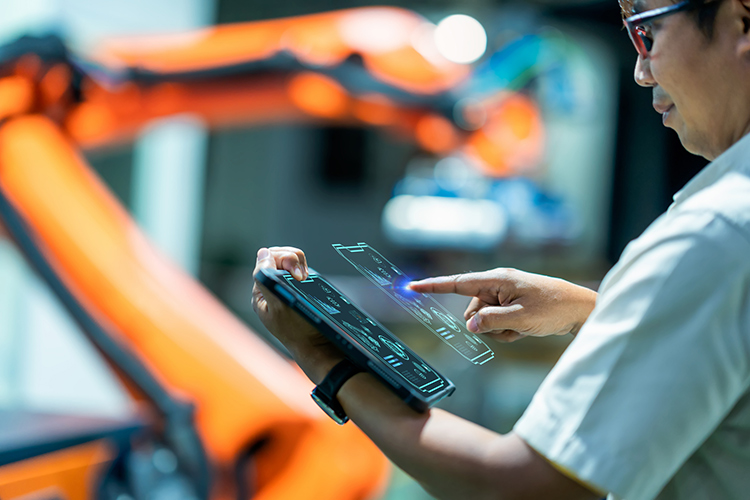
Inside an intelligent environment, every role becomes more cognitive and more decision‑driven. People interpret signals, understand context, make judgment calls, and navigate digital tools alongside physical ones. That is system-level work.
This is where many conversations about manufacturing skills miss the point. The focus is often on jobs becoming more technical. But the more important reality is that today’s connected production environment has become more complex. When you place people inside data-rich, automated systems, their contribution changes — whether you rewrite the job description or not.
Even tasks that look simple on the surface are now embedded in layers of automation, data, and process logic. Quality is no longer just visual. Flow is no longer just mechanical. Performance is no longer just physical. Everything is connected. And when everything is connected, every role carries more responsibility than it used to.
This also reframes the conversation around automation. Automation doesn’t replace people — it changes how people add value. As machines take on more repetitive, dangerous or physically demanding tasks, human work shifts toward interpretation, troubleshooting, problem solving, and continuous improvement. The work becomes less about motion and more about judgment.
Once manufacturing is viewed as a system rather than a collection of machines, outdated assumptions start to fall away. Roles still vary in training and experience, but in a smart manufacturing environment, every role interacts with complexity. Every role influences quality, flow, safety, and performance. Every role requires situational awareness and digital fluency.
This mindset has real implications for how factories are designed and how new technologies are introduced. If people are treated as interchangeable labor, the full value of smart manufacturing will never be realized. If digital fluency is treated as optional, advanced automation will underperform or fail to scale. And if work is organized around outdated assumptions, systems will be built that limit rather than unlock human potential.
The opportunity ahead is not only about efficiency. It is about creating environments where humans and intelligent systems complement each other. Machines bring speed, consistency, and data. People bring context, judgment, and creativity. When those strengths align, the impact can be powerful.
Manufacturing has always been skilled work. What is changing is how that skill shows up on the factory floor. In the era of intelligent, connected production, the most valuable capability is not physical repetition — it is understanding. It is interpretation. It is the ability to see the system and act within it in real time.
That is the reality of the modern factory.

We want to hear from you
Send us your questions, thoughts and inquiries or engage in the conversation on social media.
Related Stories
5-min read
5 Technology Shifts Reshaping Vehicle Access
Read story
4-min read
The Real Challenge of Software-Defined Vehicles Isn’t Software
Read storyStay connected
You can stay connected with Magna News and Stories through email alerts sent to your inbox in real time.