How Driving Simulators are
Transforming Development Cycles
KEY TAKEAWAYS:
• High-fidelity driving simulation is transforming chassis development and shifting key decisions to earlier project phases
• The integration of simulation and human perception enables a new level of vehicle evaluation
• Virtual testing environments open new possibilities to address complex development challenges
• Trade-offs and variant complexity can be identified and managed earlier
• Driving simulation is becoming a key enabler for faster development cycles and reduced time to market
CHASSIS DEVELOPMENT UNDER PRESSURE: INCREASING COMPLEXITY AND SHORTER CYCLES
Modern vehicle development is facing growing pressure. Product life cycles are shrinking, while vehicle variants and technological complexity continue to increase.
This is particularly evident in chassis development, where ride comfort, vehicle dynamics, and efficiency must be balanced, often within tight timelines.
Traditional development approaches are reaching their limits. They rely heavily on iterative processes based on physical prototypes and real-world test drives—each iteration requiring time, cost, and organizational effort.
As a result, a new approach is gaining relevance: high-fidelity driving simulation. Companies such as Magna are leveraging these technologies to fundamentally reshape development processes - starting from early project phases.
EARLIER DECISIONS IN VEHICLE DEVELOPMENT
Vehicle driving characteristics are no longer defined solely on test tracks. They are determined much earlier - already during the concept phase.
These early decisions influence critical aspects such as:
- Overall chassis architecture
- Suspension, damping, and tire system configuration
- Key system parameters affecting vehicle dynamics
- Functional aspects of driver assistance systems (ADAS)
However, adjustments at later stages are often limited.
This creates a fundamental challenge: many early decisions are still based on simulation data and experience - without the ability to actually "feel" the vehicle.
CLOSING THE GAP: SIMULATION MEETS DRIVER PERCEPTION
For years, simulation has delivered reliable insights into vehicle behavior. What has been missing is the direct connection to subjective driver perception.
High-fidelity driving simulators close this gap by making physically accurate vehicle models directly perceivable for test drivers and customers.
This enables, for the first time, a consistent integration of:
- Numerical simulation
- Physical vehicle behavior
- Human perception
As a result, differences between vehicle variants are not only visible - but experientially tangible, enabling more informed decision-making.
HIGH-FIDELITY SIMULATION AS A KEY TECHNOLOGY
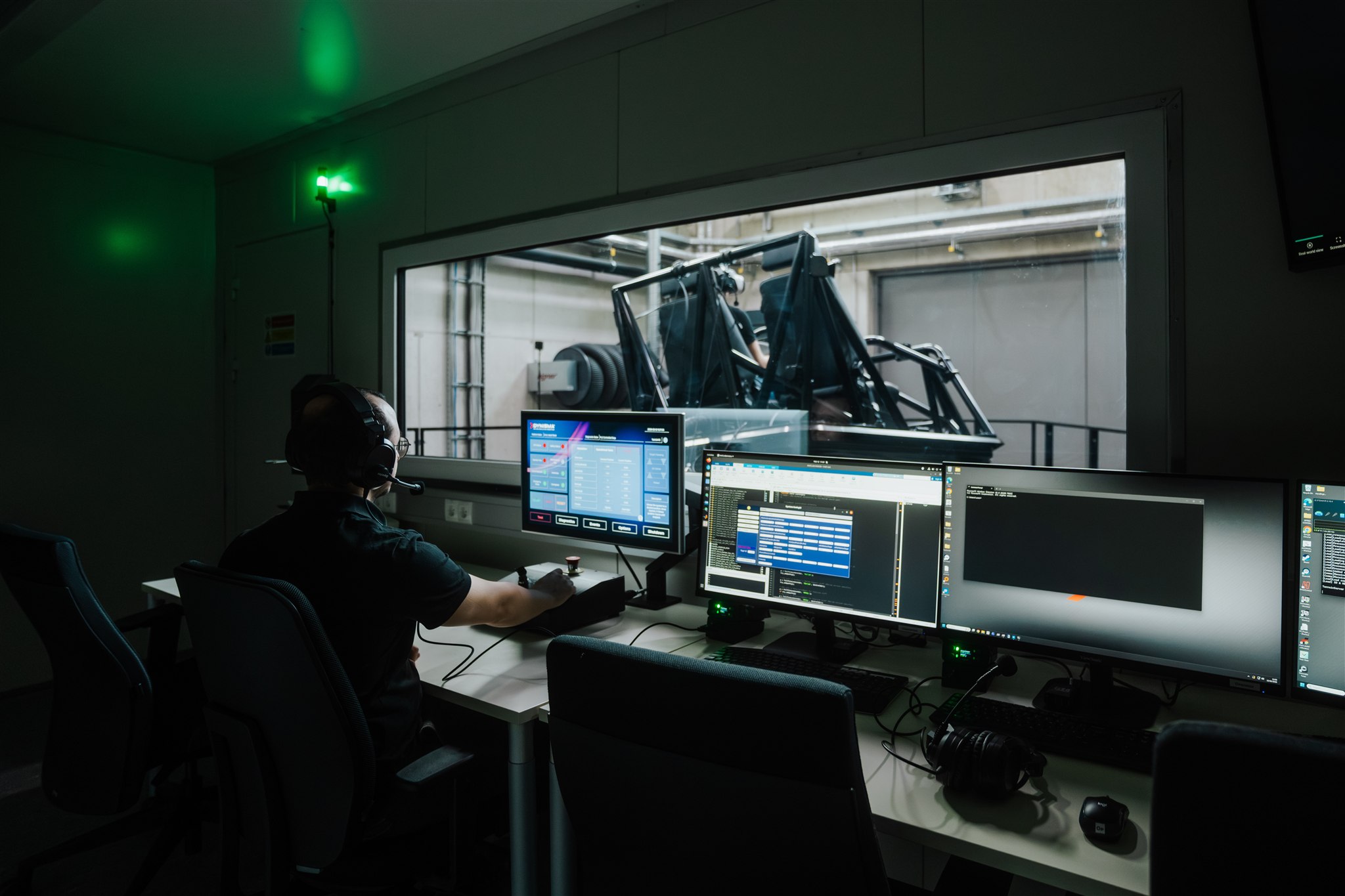
The quality of early decisions depends heavily on the realism of simulation. A drive-in-the-loop simulator, such as Magna’s Dynisma DMG-X, combines multiple advanced technologies to deliver a highly precise and consistent driving experience:
- A 6-DOF motion system replicates realistic vehicle movements (longitudinal, lateral, pitch, roll, yaw)
- High-frequency motion feedback (>100 Hz) allows even subtle vibrations to be perceived
- Ultra-low system latency (3–4 milliseconds) ensures immediate response and reduces motion sickness
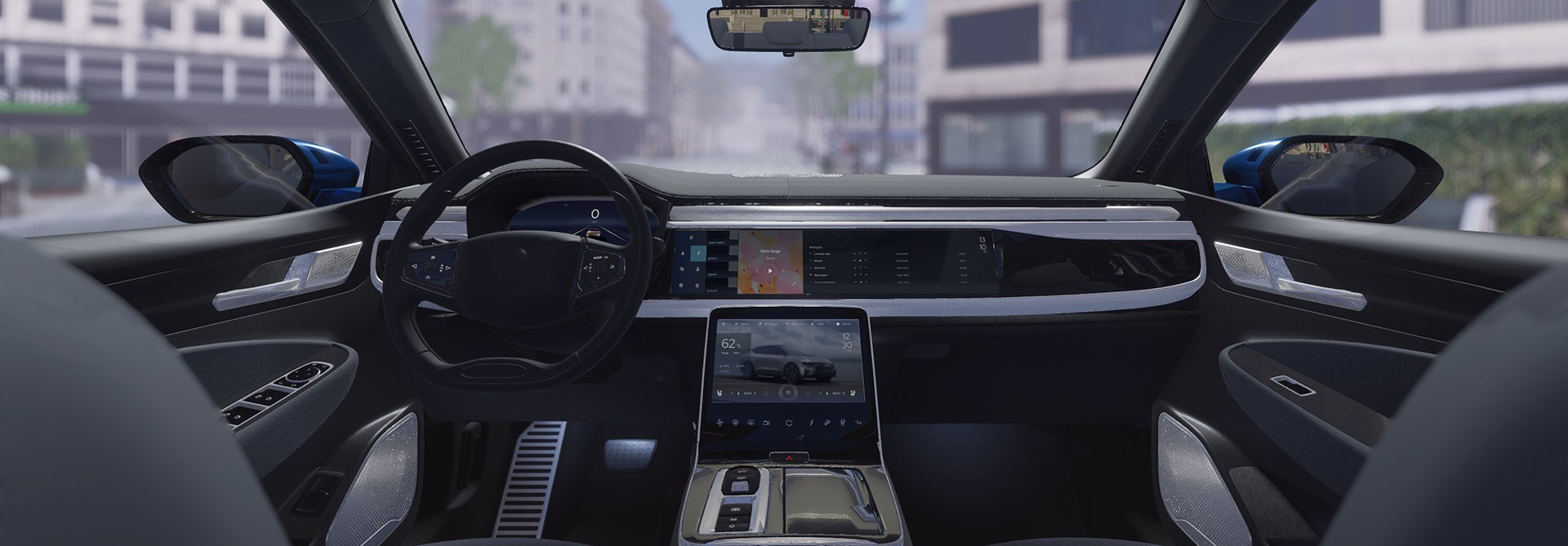
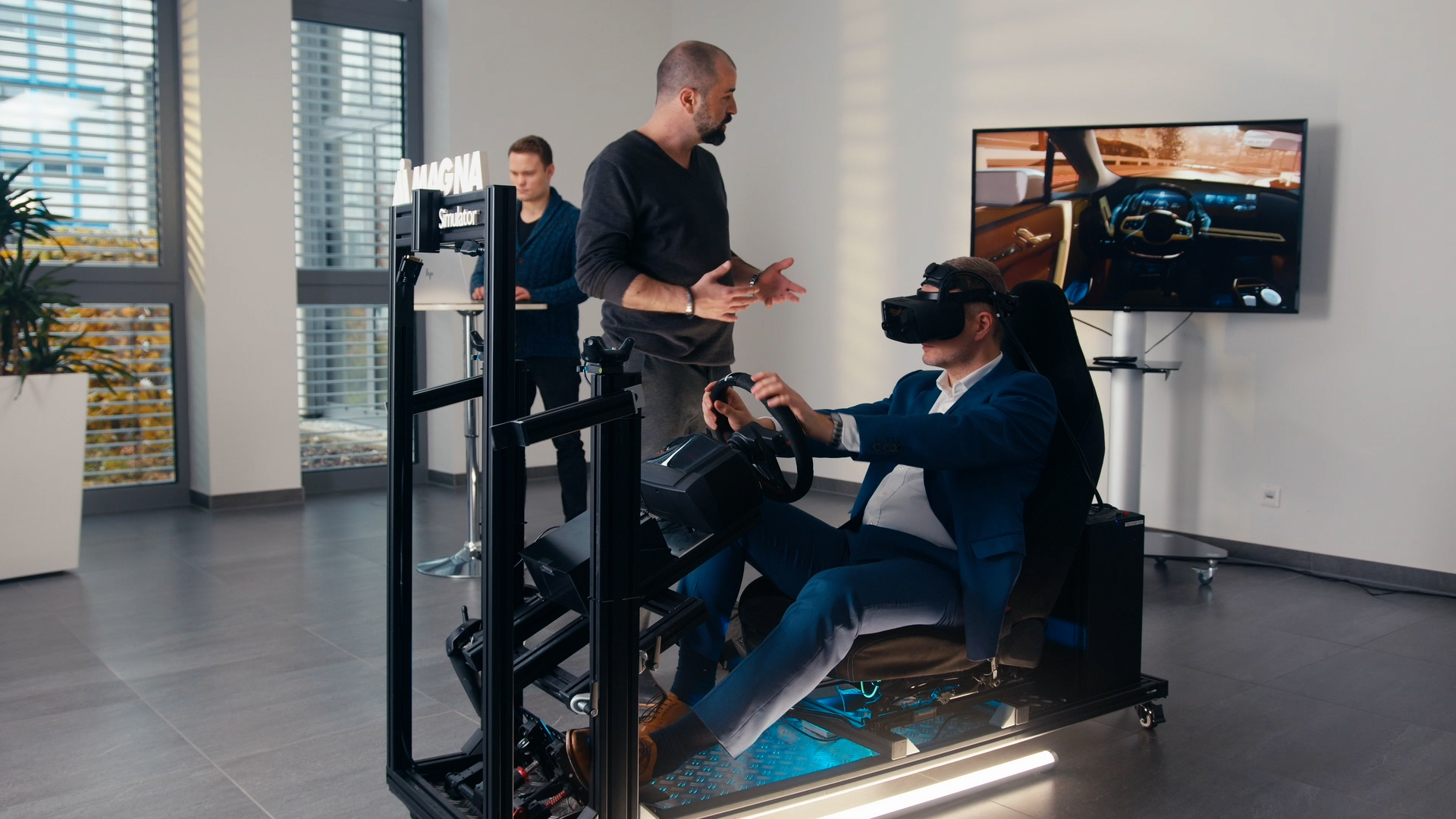
- Virtual reality integration enables realistic traffic scenarios and the evaluation of cockpit and HMI concepts
This combination allows simulation results, physical behavior, and subjective perception to be compared and evaluated in an integrated way.
This level of detail is particularly critical for modern vehicle concepts—such as electric vehicles - where vibrations are more noticeable.
BEYOND CHASSIS: BROAD APPLICATION ACROSS VEHICLE DEVELOPMENT
High-fidelity driving simulation is no longer limited to chassis development.
It is increasingly being used to develop and evaluate:
- Tire characteristics
- System parameters
- Advanced Driver Assistance Systems (ADAS)
- Automated and autonomous driving functions
- HMI and cockpit concepts
Combined with virtual traffic scenarios, even complex driving situations can be reproduced in a safe, controlled, and flexible environment—long before physical prototypes exist.
MANAGING VARIANT COMPLEXITY
One of the biggest challenges in vehicle development is handling the large number of possible configurations. Even small changes in components can create a complex combination of variants.
Driving simulation fundamentally transforms this process:
- Variants are developed virtually
- Relevant configurations are selected systematically
- Selected variants are experienced and evaluated in the simulator
The result: reproducible testing under identical conditions - a clear advantage over real-world testing.
Instead of relying on hardware-intensive validation, development becomes digitally driven and significantly more efficient.
RESOLVING TRADE-OFFS EARLY
Vehicle dynamics and ride comfort often conflict.
- Sporty tuning improves feedback but increases perceived vibrations
- Comfort-oriented tuning reduces vibrations but affects handling
In traditional processes, such trade-offs often become visible late in development.
With driving simulation, different setups can be directly compared at an early stage - allowing engineers to experience the impact, not just analyze it.
This enables better-informed decisions and precise definition of the optimal compromise before hardware is finalized.
ADDRESSING GLOAL MARKET REQUIREMENTS
Vehicles are developed for global markets with varying customer expectations regarding ride comfort and driving behavior.
Driving simulation makes it possible to address these requirements early by enabling parallel development and testing of different configurations - without physical vehicles.
This reduces development effort while increasing market-specific precision.
Magna’s simulator currently supports a wide range of virtual test scenarios, including straight tracks, multi-lane highways, handling courses, and complex proving grounds.
SIMULATION AS A FLEXIBLE DEVELOPMENT PLATFORM
Modern driving simulators go far beyond being simple tools - they act as flexible development platforms.
Key advantages include:
- Adaptable hardware components (steering wheel, pedals, seating systems)
- Multiple vehicle models and track configurations
- Real-time adjustment of environmental conditions
Unlike physical prototypes, environmental influences - such as road conditions - can be modified instantly.
This flexibility significantly reduces development time while improving comparability of results across scenarios.
REDUCING TIME TO MARKET WITH DRIVING SIMULATION
The most significant impact of high-fidelity simulation lies in accelerating the entire development process.
Key benefits include:
- Reduced number of physical prototypes
- Shortened testing cycles
- Significantly faster time to market
At the same time, decision quality improves due to a broader data and experience base.
For OEMs, this translates into greater innovation flexibility, especially in global development programs.
LIMITATIONS REMAIN - BUT THE FOCUS SHIFTS
Despite technological progress, physical prototypes remain essential for final validation and fine-tuning.
However, these steps are now based on significantly better decisions.
The development process becomes more focused, efficient, and predictable.
CONCLUSION AND OUTLOOK
High-fidelity driving simulators such as the Dynisma DMG-X are fundamentally transforming vehicle development.
Decisions move to earlier stages, variants become tangible, and trade-offs become transparent.
As a result, the entire development paradigm shifts - from late-stage, costly iterations to early, data-driven decisions.
Time to market is not only reduced - it becomes actively manageable, making driving simulation a key building block of modern vehicle development.
Stay connected with Inside Automotive!


FAQs
We want to hear from you
Send us your questions, thoughts and inquiries or engage in the conversation on social media.
Related Stories

Project Management as the Key to an Optimized Development Phase and a Stable Start of Production (SOP)
Inside Automotive
The Future of UI/UX Concept Visualization in the Automotive Industry: Innovations, Challenges, and Perspectives
Inside Automotive

UI/UX Design in Vehicle Development: How Design Shapes the User Experience
Inside Automotive
Stay connected
You can stay connected with Magna News and Stories through email alerts sent to your inbox in real time.