
Market and Industry in Transition: How a Competent Partner Can Help Navigate Challenges in the Automotive Industry
The automotive industry is experiencing a rapid transformation driven by key trends such as electrification and the reduction of carbon footprints. Product portfolios need to be reconsidered, and new competitors are entering the market with new products. Additionally, manufacturers must keep pace with the accelerating speed of technological advancements, necessitating shorter development cycles and lower production volumes.
The challenges faced by companies in the automotive industry vary depending on their stage of development. Established manufacturers are seeking new partnerships to find synergies and address current industry needs. Others are looking for reliable partners to support their localization efforts in Europe, while newcomers require support in setting up manufacturing infrastructure. Nevertheless, the following points are essential to any vehicle manufacturer:
- Decrease time to market: Accelerate project launches and respond swiftly to evolving customer needs.
- Improve operational flexibility: Adapt production processes and structures to changing market requirements and diverse customer projects.
- Reduce one-time investments and running costs: Leverage established infrastructure, global supplier networks, and proven processes to optimize costs throughout the value chain.
- Drive digitalization, AI, and automation: Harness advanced IT systems, digital interfaces, and automation to enhance efficiency, transparency, and quality.
As the global #1 Complete Vehicle Solutions Partner, Magna delivers comprehensive solutions across the entire automotive value chain—from development and production to logistics and quality assurance. Our deep expertise, flexibility, and innovative strength make us the preferred partner for established OEMs as well as newcomers and expansionists in the automotive industry.
In the following articles, we will show you how we seamlessly integrate manufacturing projects into our processes, ensuring that the needs of our customers are met with tailormade-solutions.
Chapter 1: Why a Manufacturing Project Needs Professional Program Management
Chapter 2: Strategic Procurement: Not Just a Matter of Price
Chapter 3: Trust and Control: Supplier Quality Assurance
Chapter 4: No Slip-Ups Allowed: Quality is Plannable
Chapter 5: Green and Responsible: Sustainable Car Production
Chapter 6: Saving Means Conserving: Environmentally Friendly Logistics
Chapter 7: Industry 4.0: The Importance of IT in Car Production
Chapter 8: Let's Talk About Money: The Financial Side of Series Production
Chapter 9: Successfully Setting the Course - Production Startup Management
The collaboration between manufacturer and production facility requires transparency and clear communication — both professionally and personally. This includes establishing efficient structures and integrating all stakeholders relevant to the respective project. Therefore, program management lays the groundwork for new projects across different departments.
WHY A MANUFACTURING PROJECT NEEDS PROFESSIONAL PROGRAM MANAGEMENT
by Claus Breitfuss, Program Manager
Successfully initiating and executing a series production project at a contract manufacturer requires more than just excellence in manufacturing. In the context of automotive production, program management plays a crucial role by connecting the various company departments involved and facilitating seamless cooperation between all parties.
There are several reasons why a car manufacturer might choose to outsource the production of a particular vehicle project to a contract manufacturer. In some cases, the manufacturer will take on the role of a general contractor, overseeing the development, supply chain management, and production. Alternatively, the manufacturer may opt for a more decentralized approach, utilizing split production to cater to specific market demands. This entails manufacturing a certain volume for markets where demand is high or during periods of production surges. Finally, there are circumstances in which it is sensible to outsource the phase-out production of a vehicle type that is still in demand and is approaching the end of its product life cycle.
Following the commission of the project, the assigned program managers will assist with contract drafting and working out the technical implementation. This approach offers a clear benefit for both customers and manufacturers by securing a streamlined exchange of information and ensuring that all parties are aligned with the program's requirements and objectives.
Also, logistics is a critical component of a program. It is essential to find the right balance to minimize the amount of capital stored in inventories while maintaining a high level of security in the event of supply chain disruptions.
Magna, a multi-OEM serial manufacturer, can rely on a great amount of experience and an existing global supplier network. This facilitates program management and shortens preparation time, allowing the manufacturer to enter the market more quickly while reducing non-recurring costs.
In certain instances, professional program management can demonstrate potential avenues for collaboration to manufacturers while safeguarding the product and maintaining the confidentiality of proprietary information. It can serve as a liaison between manufacturers, fostering synergies as a neutral third party.
Overall, there are many reasons why experienced program management can have a positive impact on a vehicle project’s general success, procedure, and quality. For more in-depth information about this topic, read our expanded article here.
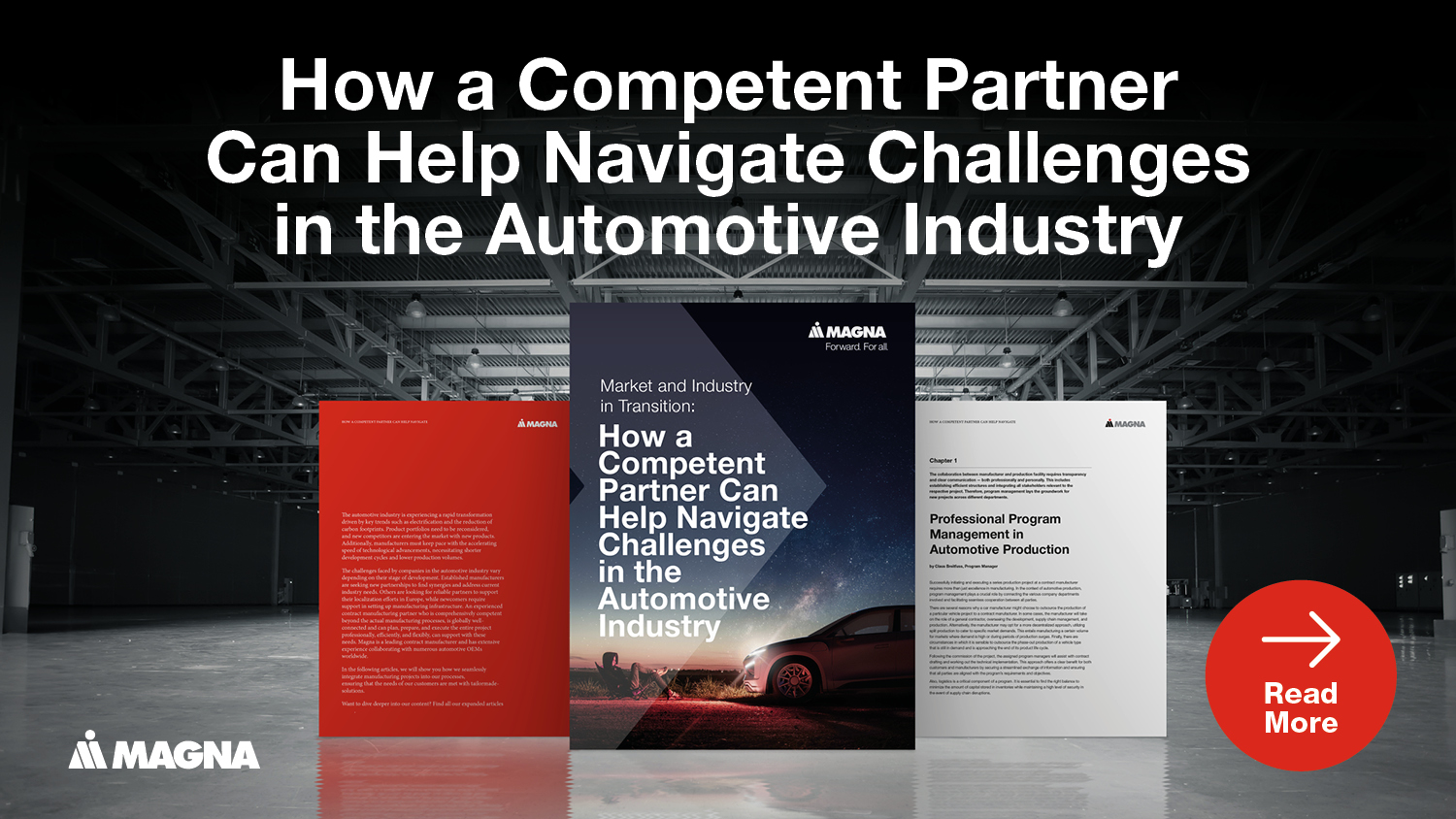
A vehicle consists of many assemblies and components. Depending on the level of value creation agreed upon between the automaker and the contract manufacturer, the predominant number of components are not manufactured by the production facility itself but are purchased. To ensure efficient, reliable, and cost-effective production, procurement plays a central role.
STRATEGIC PROCUREMENT: NOT JUST A MATTER OF PRICE
by Arno Campostrini, Senior Director of Purchasing
A contract manufacturer in the automotive industry faces competition not only from other contract manufacturers but also from the vehicle manufacturer’s own production facilities. Outsourcing vehicle production to an external partner occurs only when clear advantages are present, such as when external production is more profitable. Purchasing strategies are a critical element in ensuring this profitability.
New projects often require entirely new sourcing considerations. For instance, sustainability concerns and managing CO2 footprints are becoming increasingly crucial factors in purchasing decisions. These requirements are now expected not only by vehicle manufacturers but also by suppliers and sub-suppliers. Furthermore, new projects often necessitate collaboration with new types of suppliers, particularly as the industry shifts from combustion engines to e-mobility.
Purchasing strategies are not only initiated when specific components need to be sourced but are already integrated into the SE (simultaneous engineering) team, which is also referred to as the "cloverleaf." This team consists of members from Engineering, Supplier Quality Assurance, Logistics, and Purchasing. For each component, the team assesses whether redesign and development are necessary or if it would be more cost-effective to use an off-the-shelf part, thereby reducing development and tooling expenses.
Even a contract manufacturer with strong purchasing strategies is limited in dealing with challenges that stem from external, global factors, such as political issues. Nevertheless, the purchasing department will conduct comprehensive cost analyses and benchmark comparisons to verify whether the supplier’s price increases are reasonable and justified.
Ultimately, achieving the best outcome requires the use of all available tools from the very beginning of the project and throughout the entire production process. Making an attractive offer to the vehicle manufacturer is a collaborative effort that involves multiple departments working together. If you are interested in exploring this topic more thoroughly, read our more expansive article here.
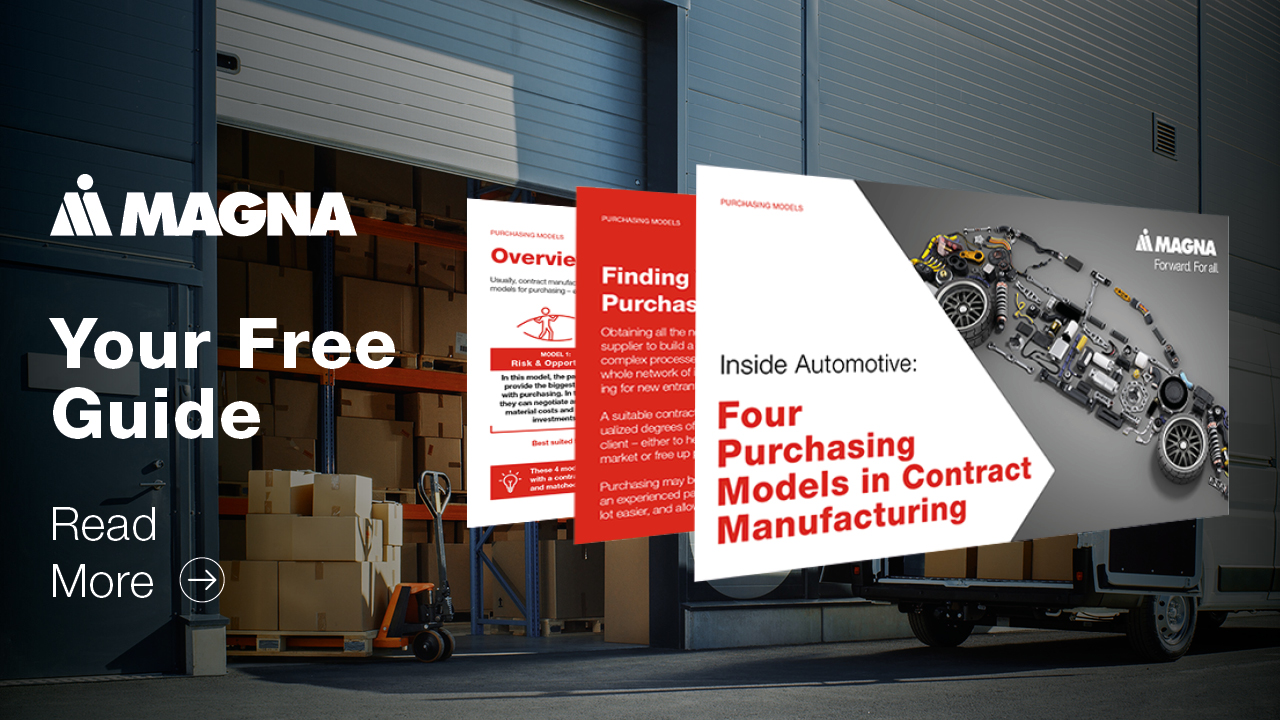
The supply chain has been established, and the suppliers have been chosen. However, to ensure high-quality of the final product, the supplied parts and components also must consistently meet high-quality standards. The prerequisites for this standard are created during the preparation phase. Ensuring supplier quality must be guaranteed throughout the entire duration of the project..
TRUST AND CONTROL: SUPPLIER QUALITY ASSURANCE
by Karl Mauerhofer, Supplier Quality Assurance (SQA)
Supplier quality assurance (SQA) is essential, whether it's within the vehicle manufacturer's own plants or in automotive production with a contract manufacturer. This is important not only for product quality but also for maintaining a smooth and efficient production process. In the case of contract manufacturing, the complexity increases due to the involvement of multiple manufacturers and numerous suppliers, making the requirements even more stringent.
Zero-defect delivery is particularly critical in modern automotive production. While purchasing focuses on identifying the best and most cost-effective suppliers – factoring in total costs such as logistics and environmental impacts – SQA's role is to assess whether a supplier can reliably produce and deliver the required quantity and quality of components. To accomplish this, an initial evaluation of the supplier is conducted at the start of the project. Software engineering also plays an increasingly significant role in supplier quality assurance, especially for control units, where clear specifications exist, but only a limited number of large suppliers can meet them.
Once a supplier is selected, the contract manufacturer works closely with the supplier to finalize the details. As part of the SQA process, the supplier’s manufacturing procedures are thoroughly examined. In some cases, this might involve modifying certain design aspects of critical parts or tools, but these changes can only be made in collaboration with the development department. This is why SQA is considered an essential member of the development team from the outset.
However, challenges can arise, such as when lifecycle tests reveal that technical adjustments to components are necessary, requiring changes to the tools. In such cases, an experienced contract manufacturer holds a significant advantage over one with less experience in quality or SQA services. A seasoned manufacturer values long-term, close collaboration with suppliers rather than simply applying pressure. If a supplier or their subcontractor faces difficulties, they work together on-site to find a solution. Open communication is key in these situations, as overcoming challenges during the start-up phase demands a joint effort. If collaboration should fail against all efforts, last-minute supplier changes are possible, but very difficult, as there are no readily available systems or tools from other partners. Additionally, changing suppliers requires a long preparation time and a repetition of all relevant tests.
Besides design specifications defined at the beginning of the project, delivered parts must pass durability tests, which include assessments of mechanical durability, ease of assembly and disassembly, and resistance to environmental conditions. During ongoing automotive production, every part is automatically checked when it is installed on the production line. Employees promptly report any defects or issues, and an inspection follows to determine if other parts from the same shipment have similar problems. If defects are found in multiple parts, the entire delivery is sorted, and the supplier is issued a claim to investigate the issue.
If the supplier does not resolve the problem and confirms that the issue has been fixed, all further deliveries will undergo sorting. Any additional costs incurred for these measures are passed on to the supplier if the defect is found to be their responsibility. Therefore, it is in the supplier’s best interest to deliver defect-free components. If these issues occur repeatedly and escalate, SQA will audit the supplier to ensure corrective actions are taken and improvements are made.
In summary, Magna SQA employees play a critical role in ensuring that the supplier quality process is continuously maintained, ensuring that all parts meet the required standards. For more information about how a contract manufacturer secures impeccable quality standards, read our full article here.
Maintaining high quality from the beginning and throughout the entire manufacturing project requires a comprehensive quality management system that encompasses all areas of the production facility. The goal is not only to achieve an objectively flawless final product but also to ensure a subjectively high-quality impression, which plays a crucial role in the market acceptance of the finished vehicle./span>
NO SLIP-UPS ALLOWED: QUALITY IS PLANNABLE
by Christoph Simon, Senior Director of Quality Management Europe & Asia
State-of-the-art quality management is an essential requirement for any successful contract manufacturer in the automotive industry. Therefore, it is necessary for any service provider or supplier to have a certified quality management system. To achieve such a system, the IATF (International Automotive Taskforce) has established standardized requirements for quality management systems. A company can only obtain IATF 16949 certification if it can demonstrate a comprehensive quality management system that encompasses all business processes.
The primary focus of this system is ensuring the high and consistent quality of the final product. For the contract manufacturer, this means not only meeting the quality criteria set by the client during the production process but also creating a product that satisfies the end customer in terms of quality. However, quality assurance begins long before the production line, starting during the project phase of a series production order.
At the beginning of any project, relevant quality assurance standards and criteria are determined in close collaboration with the vehicle manufacturer. A multi-OEM manufacturer like Magna greatly benefits from working with numerous vehicle manufacturers rather than just one, as it can integrate the best practices from its partners into its own internal standards. By the time serial production begins, all necessary alignments have been thoroughly completed. However, customers can still request modifications, which may lead to process updates as part of change management.
As a “Complete Vehicle Solutions Provider” combining product development and manufacturing under one roof, Magna enjoys the advantage of short distances, which results in faster feedback loops. For instance, aspects such as ease of manufacturability are incorporated during product development, leading to risk-optimized manufacturing processes.
In addition, well-educated and trained employees are not only more motivated but also more capable of achieving better quality. At Magna, there are two main aspects to this. First, the high ratio of skilled workers in production. Second, training each employee in their specific tasks is a key priority for robust quality management.
However, quality assessment by end customers is changing faster and can be vastly different from the quality standards from a technical viewpoint. It is particularly evident that the success of certain manufacturer’s products seems unaffected even when classic criteria are given slightly larger tolerances. Still, some vehicle manufacturers and their customers demand the highest level of “craftsmanship,” with no room for negligence on the part of the contract manufacturer. Even if end customer expectations are shifting to some degree, product quality remains central to a vehicle's success. While end customers may not be able to assess every aspect themselves, perceived quality plays a crucial role in classifying a vehicle in the automotive market. Although the contract manufacturer cannot control every aspect of the vehicle's acceptance, it can ensure it makes the best possible contribution to customer satisfaction since it is also important for the contract manufacturer that the vehicle is well received in the market.
Ultimately, test procedures and methods must be tailored for each new vehicle type that enters production. With the increasing complexity of vehicle systems, the volume of data the contract manufacturer must process keeps growing. It is becoming increasingly vital to extract and interpret information from this data in ways that provide insights into the vehicle’s functionality – and this aspect will continue to be of increasing importance in the future. For more details about the topic refer to our full article here.
Sustainable manufacturing is a cornerstone of automotive production, encompassing a broad range of environmental, social, and governance (ESG) goals. Over the past two decades, ESG considerations have evolved from secondary tasks to central elements of corporate strategy, driven by the United Nations' Sustainable Development Goals (SDGs). As the automotive industry shifts towards reducing CO2 emissions and enhancing resource efficiency, sustainable practices in manufacturing and supply chains are crucial for long-term environmental and economic benefits.
GREEN AND RESPONSIBLE: SUSTAINABLE CAR PRODUCTION
by Gernot Emmert, Manufacturing Engineering
The term "sustainability" is often most associated with initiatives aimed at improving energy efficiency to minimize CO2 emissions. However, a truly sustainable automotive production process covers a much broader range of concerns. The concept of ESG (Environmental, Social, and Governance) – which addresses environmental, sustainability, and social issues – began gaining traction around two decades ago. Since 2004, the United Nations has defined these areas and aligned them with the Sustainable Development Goals (SDGs). These goals have since become integral objectives for businesses, even as important as any other business targets. Magna, for instance, has identified seven out of the 17 SDG goals that are relevant for green automotive production:
• SDG 3 (Good Health and Well-being)
This includes initiatives such as providing health services to employees, offering medical check-ups, maintaining an occupational health center, promoting ergonomic programs, preventing burnout, offering flexible working hours, and more.
• SDG 4 (Quality Education)
Training and development opportunities, apprenticeships, collaboration with educational and research institutions, improvements to work-life balance, and even the provision of company daycare centers are essential components of sustainable corporate management.
• SDG 5 (Gender Equality) & SDG 10 (Reduced Inequalities)
Magna adheres to a strict employee charter and a binding code of conduct and ethics for all employees, which is reinforced through training. This charter ensures market-aligned salaries and equal opportunities for all employees, regardless of gender, origin, religion, or other characteristics.
• SDG 9 (Industry, Innovation, and Infrastructure), SDG 12 (Responsible Consumption and Production) & SDG 13 (Climate Action)
These SDGs also play a crucial role in influencing business decisions about sustainable manufacturing and corporate governance. You can read more about the company's sustainability initiatives here.
Today, the core objective of sustainable business operations is to eliminate emissions, particularly carbon dioxide equivalents (CO2e) emissions. This has triggered significant transformations, making resource efficiency a key ongoing theme in green automotive production. On one hand, resource efficiency helps reduce negative environmental impacts, while on the other, it directly affects the economic efficiency and profitability of the company. Achieving resource efficiency is not confined to production processes alone – it must be implemented throughout the entire supply chain.
However, taking a broader perspective reveals that focusing solely on CO2 emissions is insufficient. Numerous other pollutants need to be considered, both in terms of vehicle operation and component production. It is more beneficial to look beyond individual vehicles and recognize the bigger picture that must be addressed through the transformation of automotive technology.
As a contract manufacturer, Magna operates with a customer-centric approach, always acting in the interests of vehicle manufacturers. These manufacturers also benefit from sustainable production practices. By implementing sustainable manufacturing processes, customers can meet their corporate goals related to environmental compatibility and social responsibility. Additionally, improved energy management and reduced energy intensity lead to lower production costs.
The journey toward decarbonizing mobility, and consequently vehicle production, will undoubtedly continue. Even if this goal may not be fully realized in the near future, it remains a long-term objective for the industry. For more information about challenges and future trends of sustainable automotive manufacturing, read our full article here.
A particularly important area within the efforts for sustainable automobile manufacturing is logistics. Every transport causes emissions and consumes energy. This applies not only to inbound logistics, i.e., the supply deliveries, but also to the delivery of the final products (outbound) and the internal transports within the facility.
SAVING MEANS CONSERVING: ENVIRONMENTALLY FRIENDLY LOGISTICS
by Alfons Dachs-Wiesinger, Logistics Network
Sustainability is becoming an increasingly vital focus in the automotive production industry. If an automobile manufacturer aims to genuinely position itself as environmentally responsible, it is not sufficient to only address vehicle emissions during their operation. The production process itself must also be climate conscious. In this regard, sustainable logistics play a crucial role throughout the entire supply chain.
Generally, the carbon footprint of a product or individual is categorized into different phases, known as scopes. For vehicle manufacturing,
- Scope 1 pertains to the direct CO2 emissions generated during the vehicle’s production. These emissions are the result of energy consumption during the manufacturing process.
- Scope 2 relates to the energy production process.
- Scope 3 accounts for energy use both before and after the actual production of the vehicle, including energy consumed in sourcing and manufacturing raw materials and components, as well as transporting both parts and the final product. Indirect energy consumption inside and outside the plant is also considered.
The ideal scenario in sustainable logistics is one where transportation does not occur at all. The key concept here is a transport-optimized delivery schedule aimed at minimizing the number of transports. The next step is to convert any unavoidable transport to low-CO2 or CO2-free transport methods. The combination of road and rail transport can significantly contribute to this goal.
To assess and calculate the total CO2 impact of transportation, a certified calculation model is utilized. Magna uses a module from its own integrated transportation management system (iTMS). This system stores all necessary consignment data and other relevant parameters required to evaluate the CO2 emissions from transport, such as the size and weight of goods, types of transport used, and distances covered. Using this data, the CO2 emissions from transport can be calculated and assessed. This system can also be leveraged to identify areas where transportation logistics can be made more efficient. Close collaboration with suppliers is crucial in planning and executing these processes. In most cases, suppliers are eager to cooperate because the benefits of an integrated transportation management system are easy to communicate.
However, increasing complexity presents a significant challenge in transforming logistics within the automotive industry to be more ecologically sustainable. The necessary blend of different strategies for various tasks results in even greater complexity. Additionally, an evaluation is required to determine which transportation technologies will prevail and which will eventually decline or even vanish, depending on the political climate and which technologies are supported by infrastructure improvements.
Furthermore, digitalization will continue to play a growing role in sustainable logistics—not only to address the challenges posed by rising complexity but also to facilitate further integration of data flows. This will be essential for improving cooperation and ensuring greater security in logistics across company boundaries. For a more detailed look at sustainable logistics, read our expansive article here.
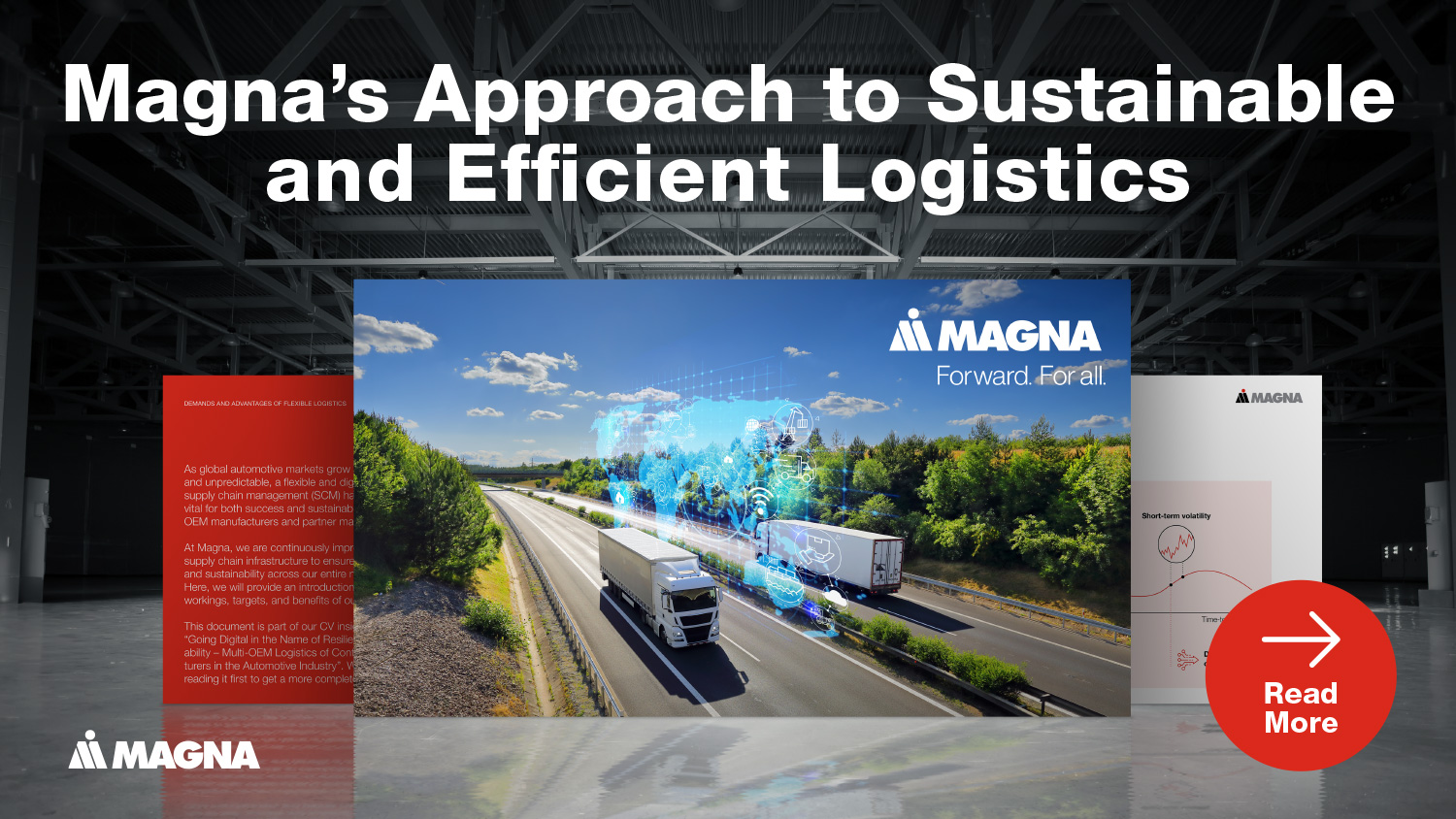
Without communication and global data exchange, today's automobile production is just as unthinkable as virtually all other areas of modern industry. This applies to a contract manufacturer just as much as to the manufacturers' own factories. However, the operations of a multi-OEM manufacturer bring additional challenges that must be managed by a powerful IT department.
WHY INDUSTRY 4.0: THE IMPORTANCE OF IT IN CAR PRODUCTION
by Manfred Ziegler, Global IT
The automotive industry is rapidly evolving towards the Software Defined Vehicle. Vehicles are increasingly shaped by software and digital services. Magna is meeting this challenge with a robust IT infrastructure that enables flexible and efficient production of diverse vehicle types, while ensuring the highest standards in digitalization, data security, and automation.
The lead time for establishing a serial production typically spans two to three years from the acquisition of the order to the Start of Production (SOP). Information Technology (IT) plays a crucial role from the very start: in the bidding phase, it is responsible for evaluating and assessing the systems and processes needed for the specific project. It must identify what is required, what already exists, and the nature of the processes and IT integration. Only by doing so can cost calculations be made accurately, which then form the foundation of the offer. IT and its personnel remain pivotal in the following stages, such as setting up and launching serial production, as well as providing ongoing support and optimizing production processes.
A key factor in this process is the scope of the automotive project, specifically which processes the contract manufacturer is expected to manage. The IT system integration begins with the establishment of data exchange interfaces between the vehicle manufacturer and the manufacturing partner. Since different systems are commonly used depending on the country or region, Magna, as a leading contract manufacturing partner, has developed its own unique processes and systems over time. For example, Magna’s one-of-a-kind system in the industry enables the production of various vehicle types on a single assembly line. There is also the Manufacturing Execution System (MES), which controls, monitors, and supervises the production line. To optimize operations, the manufacturing partner works with the customers to improve the interfaces, standardizing processes through its own systems.
Despite efforts to optimize these systems, no IT system is entirely free of errors. Challenges may emerge after some time in operation. A manufacturing process fully controlled by IT could become more susceptible to disruptions as the complexity of the systems grows. Therefore, securing production is a top priority, especially since downtime can be very costly. A significant portion of Magna IT staff’s work happens during production breaks, when updates and new security patches are applied to keep the systems current and defend them from external threats. Ensuring total data security is also vital for the success of the project, and safeguarding sensitive information from unauthorized access, particularly by competitors, is a key responsibility of the IT department.
In general, the IT challenges faced by a contract manufacturer are greater than those encountered in the OEM’s own plants. A contract manufacturer must be capable of serving a variety of customers, making it necessary to be faster, more adaptable, and ultimately more cost-effective. Vehicle manufacturers will only choose to outsource production if it results in cost savings or other advantages. A well-equipped manufacturing partner like Magna can implement IT system changes up until the very end of the process, something that most manufacturers cannot achieve within their own production lines.
To read more about the unique challenges of and solutions for a contract manufacturer’s IT systems, be sure to read our full article here.
In the ever-evolving automotive industry, a robust financial strategy is essential for successful collaboration between vehicle manufacturers and contract manufacturers. As the industry faces continuous transformation and unpredictable future changes, financial planning must start well before production begins and careful risk assessment is required.
LET'S TALK ABOUT MONEY: THE FINANCIAL SIDE OF SERIES PRODUCTION
Hannes Klement, Senior Director of Finance Manufacturing
A robust financial strategy is crucial for effective collaboration between the vehicle manufacturer and the contract manufacturer responsible for the serial production of the vehicle project. A well-organized, consistent approach to financing, along with strong risk management, forms the foundation for many key decisions, especially as the automotive industry undergoes continuous transformation, making future changes difficult to predict.
For this reason, financial planning must begin well before the actual start of any production project. A project that fails to balance liquidity, profitability, and the successful initiation of serial production has no chance of being implemented. Financial planners need to be able to accurately assess potential opportunities and risks early on. Additionally, the financial needs of the project must be continuously monitored and adjusted as necessary during its progress.
Magna's facility in Graz is part of a global corporation composed of several companies. The crucial factor in determining which production projects can be successfully realized is the financial planning conducted beforehand, as the parent company has limited financial resources. The Graz plant must not only secure approval for the project from the manufacturer’s side but also from the parent corporation. This requires ensuring the project's profitability and carefully evaluating its opportunities and risks early on. To achieve this, both Magna in Graz and the broader corporation have established standards for selecting financially viable projects.
To avoid potential setbacks later in the process, it is especially important to carefully examine and evaluate the opportunities and risks associated with a project, particularly for manufacturing projects involving new entrants, such as first-time participants in the automotive market. Along with assessing the financial stability of the potential customer, this evaluation should also include aspects outside of a contract manufacturer's core business, such as evaluating the market potential of the vehicle concept and analyzing the sales strategy and distribution channels.
But even well-established and large manufacturers face some risk of failing to meet their sales targets. This can occur if external factors, such as global or regional crises, pandemics, or geopolitical conflicts, negatively impact business operations or if legislative changes lead to decreased consumer demand. This can also affect the contract manufacturer if they are unable to meet the expected production quantities.
There are no guaranteed solutions for how to handle such situations, as the manufacturing company has limited direct control over these external factors. Therefore, it is critical for the contract manufacturer to continuously improve and analyze its cost structure to keep the project financially stable. Being part of a larger corporation offers benefits in this regard. Regular communication and information exchange with colleagues from other companies within the group can help uncover cost-saving opportunities that have been proven in other areas and can be applied to the manufacturer's own operations. To learn more about the financial aspects and processes of automotive production, read our more expansive online article here.
Let’s dive into the nitty-gritty. The launch of an automotive series production is a complex process where various areas must seamlessly interlock. Speed is crucial, as the faster the production targets are met and the vehicles are delivered, the sooner the investments required for the project can begin to pay off. To ensure that the gears of the individual participants in simultaneous engineering mesh perfectly and a steep ramp-up can be realized, a well-thought-out startup management is required.
SUCCESSFULLY SETTING THE COURSE - PRODUCTION STARTUP MANAGEMENT
by Manuel Jenkin-Weinrich, Assistant General Manager & Production Manager
The start-up phase plays a critical role in determining whether vehicle production at a contract manufacturer in the automotive industry will be successful, efficient, and smooth. A manufacturing partner with deep experience in managing start-ups, along with expertise in complex production, material logistics, and cutting-edge factory equipment, ensures the achievement of high output and top-quality results within the shortest possible timeframe.
Effective start-up management can be likened to the operations of an airplane cockpit. Just as a pilot receives a vast amount of data from various instruments and displays and has multiple controls to make quick decisions in emergencies, automotive manufacturers benefit from information and communication systems that offer maximum transparency. These systems help them initiate the appropriate pre-planned measures to prevent supply failures. The clearer and more organized these "cockpits" are, the more efficiently vehicle production can be managed, and the quicker disruptions can be addressed.
The primary reason a manufacturer might choose to outsource vehicle production to a contract manufacturer typically involves a niche product that is only produced in small volumes, such as a variation of an existing vehicle model that is difficult to integrate into the manufacturing processes at the OEM’s own plants. In such cases, the vehicle may be produced solely by the contract manufacturer or through split production, where the contract manufacturer complements the OEM’s own production. This scenario is known as a "first start-up" and requires the contract manufacturer to handle development tasks as well. It is highly beneficial for all parties involved if the manufacturing partner possesses strong in-house development capabilities, like those of Magna.
During the second start-up, production is ramped up much more quickly because many processes from the initial production can be adapted. Additionally, in some cases, it is possible to use the same suppliers that provided the components for the primary plant’s production, streamlining the setup of the supply chain and the establishment of processes.
Another key element in successful start-up management is ensuring plant readiness. In addition to the timely setup of production technology, it is crucial to have production employees who are highly skilled and thoroughly trained for this vehicle type.
All these factors must be carefully coordinated and completed before the series production begins. Effective start-up management helps avoid issues with programming and visualization while the company is also managing processes, training, and product-related matters. Moreover, when digitalization is properly implemented, it offers the best opportunities to not only speed up series start-ups but also enhance transparency. To learn more about start-up management of vehicle production, consider reading our full article here.
PARTNERING WITH AN EXPERIENCED CONTRACT MANUFACTURER SUPPORTS YOUR VISION IN AN EVER-CHANGING MARKET
The automotive market is undergoing significant changes, and manufacturers must adapt constantly to new conditions. To meet end customer demands and fulfill sustainability targets, innovative solutions are essential. In these challenging times, the need for an experienced and established partner arises.
Magna can address a wide range of challenges by offering tailor-made complete vehicle solutions. At any stage of a vehicle's development cycle, Magna can create synergies that shorten development times and increase efficiency. Additionally, Magna provides global contract manufacturing services that cater traditional OEMs, industry newcomers and expansionists. With extensive experience and a comprehensive range of services, Magna supports you excel during this period of transition.
Stay connected with Inside Automotive!

We want to hear from you
Send us your questions, thoughts and inquiries or engage in the conversation on social media.
Related Stories

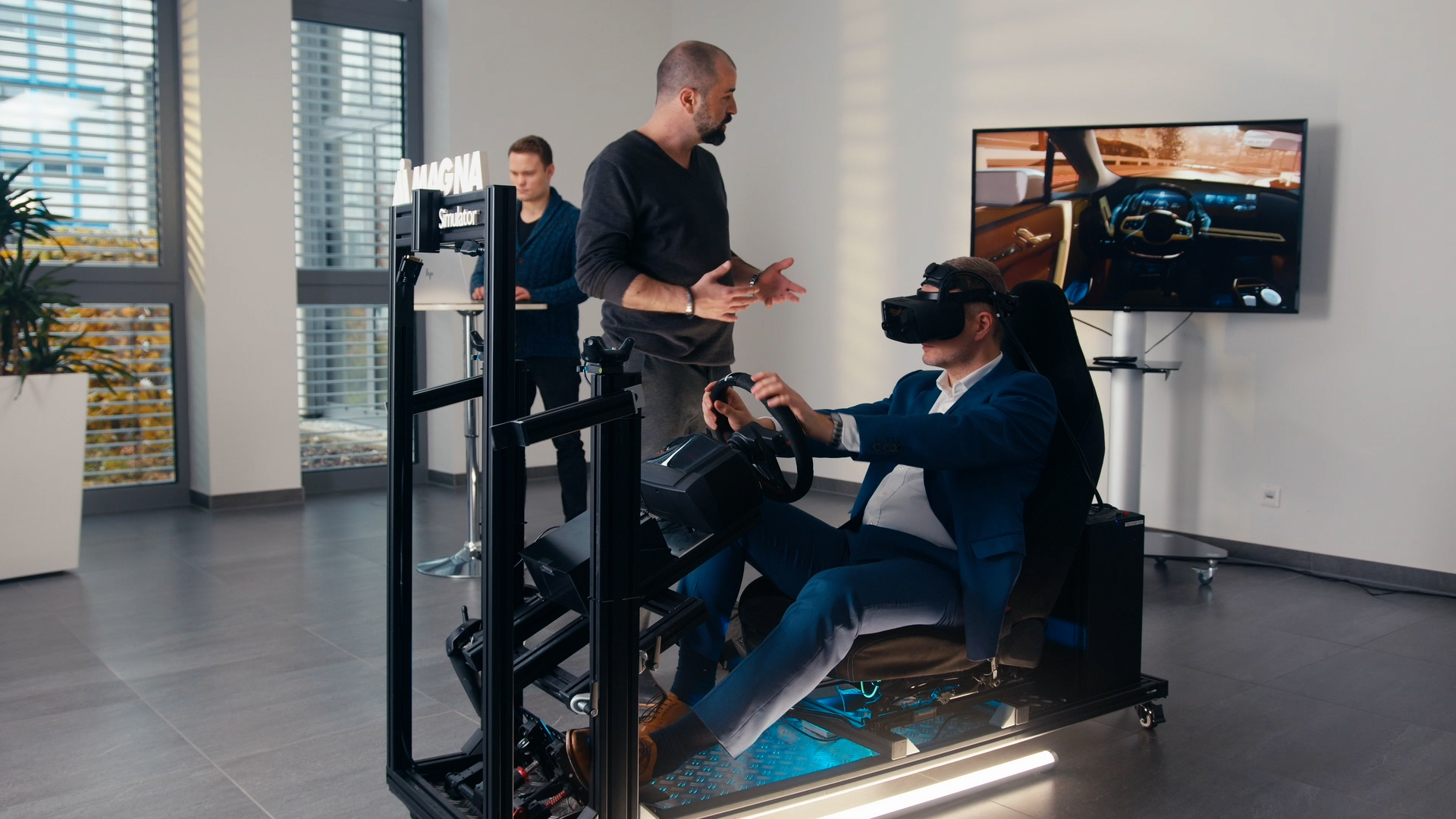
The Future of UI/UX Concept Visualization in the Automotive Industry: Innovations, Challenges, and Perspectives
Inside Automotive

UI/UX Design in Vehicle Development: How Design Shapes the User Experience
Inside Automotive
.tmb-widescreen.webp?sfvrsn=8d57edff_1)
Successfully Starting Series Production: Start-up Management in the Automotive Industry
Inside Automotive
Stay connected
You can stay connected with Magna News and Stories through email alerts sent to your inbox in real time.