4-min read
The Role of Digital Twins in Future Mobility Solutions
As active safety systems become standard in automotive technology, technological innovation is reshaping modern mobility. Yet, significant barriers remain to improving the safety and efficiency of intelligent, connected mobility solutions. Digital twins represent one of the most promising technologies to overcome these challenges and shape the future of transportation.
In essence, digital twins are virtual replicas of physical objects or processes. For example, in the context of active safety systems, a digital twin allows us to simulate a vehicle, the environment it navigates, and the actions performed in its journey, in order to predict and optimize vehicle performance.
While virtual models and simulations have long been used in vehicle design and optimization, the combination of digital twins with advancements in high-speed connectivity, real-time data collection, and artificial intelligence (AI) has unlocked an array of new applications.
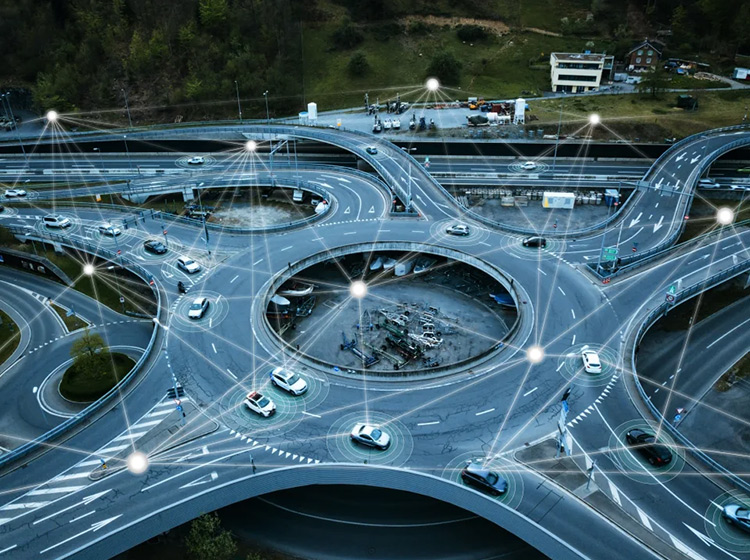
Current active safety features rely on reactive local sensors and lack the integration of real-time data necessary for continuous improvement and effective response to unforeseen events. At Magna, we address this limitation by leveraging AI-powered digital twins to provide vehicles with what we call collective perception. This intelligent process shares real-time sensor information with cloud infrastructure, creating digital twins of environments that enhance active safety features.

By transforming active safety sensors to adapt to their environments in real-time, these systems evolve from static safeguards to intelligent systems capable of proactive safety measures. As a result, data-driven decisions support proactive responses to potential threats.
Digital twins promise transformative benefits beyond active safety enhancement. They hold potential for improving fleet management logistics, optimizing energy consumption, and facilitating the efficient integration and operation of electric vehicles (EVs).
For example, using digital twins, automotive companies can simulate entire logistics networks to optimize routes, reduce fuel consumption, and enhance overall efficiency. In the realm of sustainability, digital twins can simulate and manage energy usage in EVs to extend battery life and reduce carbon footprints.
Digital twins can also be used to support operational excellence in manufacturing. Simulation supported by real-world data enables ‘virtual commissioning’ of robots and automation to optimize manufacturing processes digitally, both before they are installed as well as through the lifecycle of the manufacturing lines and workcells.
As we continue to advance digital twin technology, our goal is to place driver safety, vehicle performance, and environmental sustainability at the core of automotive innovation. The future of mobility lies in the integration of intelligent, data-driven simulations that not only enhance current systems but redefine them.
We want to hear from you
Send us your questions, thoughts and inquiries or engage in the conversation on social media.
Related Stories
5-min read
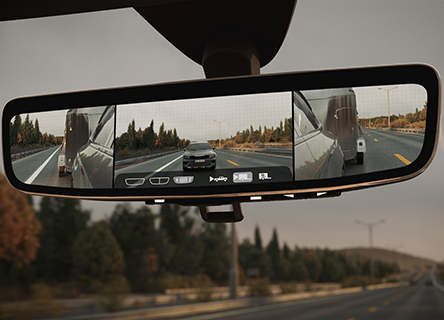
ClearView™ Vision System: One Platform, Four Ways to See More
Read story
5-min read
Why AI Success Starts with Business Value and Process Redesign
Read storyStay connected
You can stay connected with Magna News and Stories through email alerts sent to your inbox in real time.